

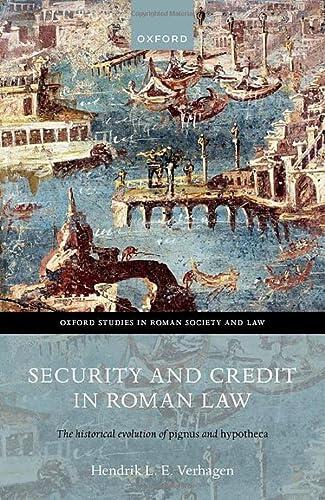
Security and Credit in Roman Law: The Historical Evolution of Pignus and Hypotheca
بواسطة
Hendrik L. E. Verhagen
لا توجد تقييمات بعد
Romance
History
تنسيق
غلاف صلب
صفحات
448
لغة
الإنجليزية
منشور
Dec 15, 2022
الناشر
Oxford University Press
رقم ISBN-10
0199695830
رقم ISBN-13
9780199695836
الوصف
In "Security and Credit in Roman Law," Hendrik L. E. Verhagen delves into the intricate development of two pivotal concepts in Roman law: pignus and hypotheca. The author meticulously unfolds the historical evolution of these legal instruments, providing a comprehensive analysis of their implications for security and credit within Roman society. By examining the socio-economic contexts surrounding these constructs, Verhagen illustrates the ways in which legal frameworks adapted to meet the needs of a dynamic society.
Verhagen's insightful exploration reveals the transformative nature of pignus and hypotheca, shedding light on their roles as mechanisms for securing debts and fostering financial transactions in ancient Rome. The detailed narrative intertwines legal history with practical realities of everyday life, allowing readers to grasp the significance of these concepts not just as isolated legal jargon but as essential pillars of Roman economic structure.
Through rich scholarship, the book underscores how these instruments shaped relationships between creditors and debtors, influencing notions of ownership and obligation. Verhagen's work serves as a vital resource for anyone interested in the intersections of law, society, and economics in the ancient world, offering a nuanced understanding of how Roman legal practices laid the groundwork for contemporary legal systems.
Verhagen's insightful exploration reveals the transformative nature of pignus and hypotheca, shedding light on their roles as mechanisms for securing debts and fostering financial transactions in ancient Rome. The detailed narrative intertwines legal history with practical realities of everyday life, allowing readers to grasp the significance of these concepts not just as isolated legal jargon but as essential pillars of Roman economic structure.
Through rich scholarship, the book underscores how these instruments shaped relationships between creditors and debtors, influencing notions of ownership and obligation. Verhagen's work serves as a vital resource for anyone interested in the intersections of law, society, and economics in the ancient world, offering a nuanced understanding of how Roman legal practices laid the groundwork for contemporary legal systems.