

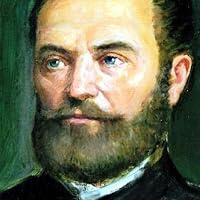
János Bolyai
درباره نویسنده
János Bolyai was a Hungarian mathematician renowned for his groundbreaking work in non-Euclidean geometry. He was born in 1802 in Kolozsvár, which is now Cluj-Napoca in Romania. His most significant contribution to mathematics was the formulation of a consistent system of geometry that contradicted the long-held beliefs established by Euclid. Bolyai's work laid the foundation for the development of hyperbolic geometry, which would later influence many areas of mathematics and science. Despite his early work being largely unrecognized, Bolyai's ideas eventually gained acknowledgment and sparked interest among mathematicians, including the likes of Henri Poincaré and David Hilbert.
Bolyai's pioneering efforts were encapsulated in his landmark publication, "The Science Absolute of Space", which he published in 1832. His exploration of the properties of space and the nature of parallel lines challenged existing paradigms and opened new pathways for mathematical inquiry. Today, Bolyai is celebrated as one of the forefathers of modern geometry, and his influence extends beyond mathematics into the realms of physics and philosophy. His legacy continues to inspire mathematicians and scientists around the world, solidifying his place in the annals of mathematical history.