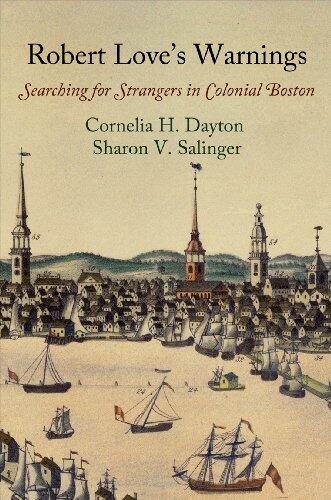
Robert Love's Warnings: Searching for Strangers in Colonial Boston
によって
Cornelia H. Dayton
まだ評価がありません
History
形式
ハードカバー
ページ数
272
言語
英語
公開されました
Mar 4, 2014
出版社
University of Pennsylvania Press
版
First Edition
ISBN-10
0812245938
ISBN-13
9780812245936
説明
In colonial Boston, Robert Love took on the daunting task of delivering warnings to a diverse array of itinerants and travelers. Cornelia H. Dayton and Sharon V. Salinger delve into the nuances of this intriguing historical figure and the societal dynamics of the time. Through meticulous research, they unveil the complexities of Love's messages, which served as vital guidelines for navigating the turbulent waters of colonial America.
Love's warnings extended to around four thousand individuals, illuminating the interactions between locals and outsiders. These encounters reveal much about the societal fears and prejudices prevalent in that era. The authors effectively paint a vivid picture of colonial life, highlighting the precarious balance between hospitality and caution that defined community relationships.
The narrative explores the broader implications of Love's warnings, suggesting their role in shaping the burgeoning social fabric of Boston. As the authors weave together personal stories and historical context, they invite readers to reflect on themes of belonging, security, and mistrust that resonate even today.
Through a careful examination of documentation from the period, the work serves as an engaging exploration of how one man's efforts to protect his community catalyzed discussions about identity and the outsider’s place within society. This exploration makes an important contribution to the understanding of early American culture and the complexities of human connection.
Love's warnings extended to around four thousand individuals, illuminating the interactions between locals and outsiders. These encounters reveal much about the societal fears and prejudices prevalent in that era. The authors effectively paint a vivid picture of colonial life, highlighting the precarious balance between hospitality and caution that defined community relationships.
The narrative explores the broader implications of Love's warnings, suggesting their role in shaping the burgeoning social fabric of Boston. As the authors weave together personal stories and historical context, they invite readers to reflect on themes of belonging, security, and mistrust that resonate even today.
Through a careful examination of documentation from the period, the work serves as an engaging exploration of how one man's efforts to protect his community catalyzed discussions about identity and the outsider’s place within society. This exploration makes an important contribution to the understanding of early American culture and the complexities of human connection.