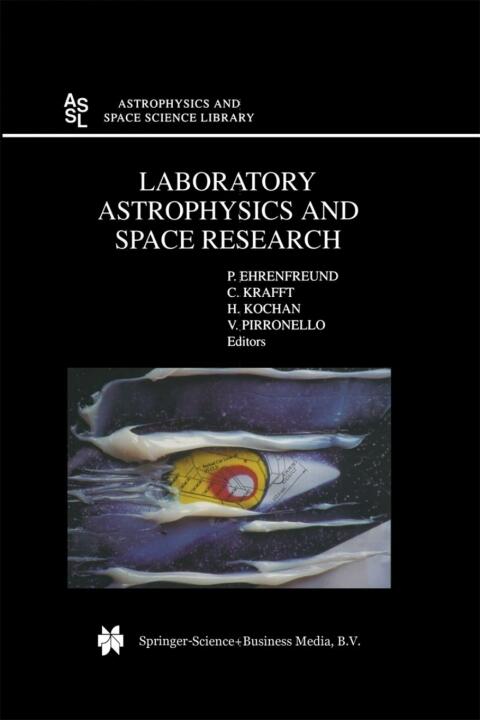
Laboratory Astrophysics and Space Research
작성자
P. Ehrenfreund; C. Krafft; H. Kochan
아직 평점이 없습니다
Science & Technology
형식
킨들
페이지
698
언어
네덜란드어, 플라망어
출판됨
Jan 1, 2012
출판사
Springer
판
1999
ISBN-10
9401147280
ISBN-13
9789401147286
설명
This work delves into the cutting-edge advancements in laboratory astrophysics and space research, showcasing the vital intersection between controlled experimental environments and the vastness of the cosmos. The authors bring together a wealth of knowledge, revealing how terrestrial experiments can illuminate celestial phenomena and contribute to a deeper understanding of the universe.
As the narrative unfolds, readers are introduced to various innovative methodologies utilized in laboratory settings to simulate cosmic conditions. This exploration not only highlights the ingenuity of scientists but also emphasizes the importance of interdisciplinary collaborations in unraveling the mysteries of space. Experimental results, tied closely to astrophysical theories, create a cohesive bridge that enhances the reader's grasp of complex concepts.
The book is enhanced by detailed examples of past and ongoing research that underscore the relevance of laboratory findings to real-world astrophysics. Through these illuminating discussions, it becomes clear that laboratory studies are indispensable for validating theories about the behavior of matter and energy in space.
Overall, the text serves as a comprehensive resource for researchers, educators, and enthusiasts, igniting curiosity and inspiring future explorations into the dynamic relationship between laboratory studies and cosmic queries.
As the narrative unfolds, readers are introduced to various innovative methodologies utilized in laboratory settings to simulate cosmic conditions. This exploration not only highlights the ingenuity of scientists but also emphasizes the importance of interdisciplinary collaborations in unraveling the mysteries of space. Experimental results, tied closely to astrophysical theories, create a cohesive bridge that enhances the reader's grasp of complex concepts.
The book is enhanced by detailed examples of past and ongoing research that underscore the relevance of laboratory findings to real-world astrophysics. Through these illuminating discussions, it becomes clear that laboratory studies are indispensable for validating theories about the behavior of matter and energy in space.
Overall, the text serves as a comprehensive resource for researchers, educators, and enthusiasts, igniting curiosity and inspiring future explorations into the dynamic relationship between laboratory studies and cosmic queries.