

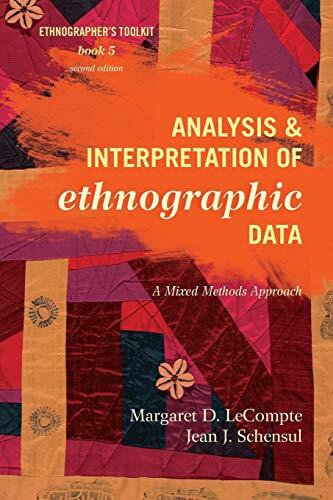
Analysis and Interpretation of Ethnographic Data: A Mixed Methods Approach
아직 평점이 없습니다
형식
페이퍼백
페이지
358
언어
영어
출판됨
Sep 5, 2012
출판사
Altamira Press
판
Second
ISBN-10
0759122075
ISBN-13
9780759122079
설명
In this insightful volume, the authors present a comprehensive framework for analyzing and interpreting ethnographic data through a mixed methods approach. This exploration emphasizes the dual nature of analysis, viewing it as both a systematic procedure and an intellectual endeavor. By engaging with various analytical techniques, readers are guided to understand the intricacies involved in transforming raw data into meaningful insights.
The narrative unfolds by delving into the rationale behind employing mixed methods, illustrating how the integration of qualitative and quantitative data can enrich ethnographic research. Through practical examples and detailed explanations, the authors elucidate the complexities of data triangulation, allowing researchers to capture a multifaceted understanding of cultural phenomena.
Readers are encouraged to reflect critically on their own analytical processes, fostering a deeper awareness of the cognitive dimensions that shape their interpretations. The book serves not only as a guide for novices but also as a valuable resource for seasoned ethnographers seeking to enhance their analytical skills.
Ultimately, this volume stands as an essential addition to the Ethnographer's Toolkit series, equipping researchers with the tools necessary to navigate the nuanced landscape of ethnographic analysis with confidence and clarity.
The narrative unfolds by delving into the rationale behind employing mixed methods, illustrating how the integration of qualitative and quantitative data can enrich ethnographic research. Through practical examples and detailed explanations, the authors elucidate the complexities of data triangulation, allowing researchers to capture a multifaceted understanding of cultural phenomena.
Readers are encouraged to reflect critically on their own analytical processes, fostering a deeper awareness of the cognitive dimensions that shape their interpretations. The book serves not only as a guide for novices but also as a valuable resource for seasoned ethnographers seeking to enhance their analytical skills.
Ultimately, this volume stands as an essential addition to the Ethnographer's Toolkit series, equipping researchers with the tools necessary to navigate the nuanced landscape of ethnographic analysis with confidence and clarity.