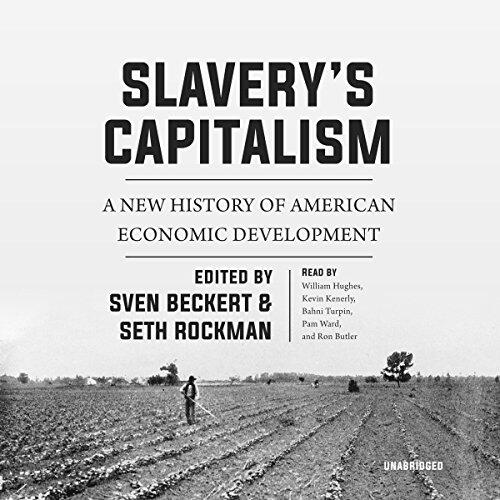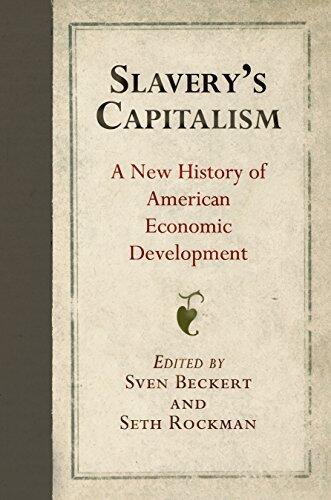
Slavery's Capitalism: A New History of American Economic Development
Inga betyg ännu
Romance
History
Business & Economics
Format
Kindle
Sidor
406
Språk
Engelska
Publicerad
Jul 28, 2016
Förlag
University of Pennsylvania Press
Beskrivning
In the nineteenth century, the United States transformed into a major player in the global economy, propelled by the complex relationships between slavery and capitalism. Sven Beckert and Seth Rockman explore this intricate web, shedding light on how the institution of slavery was not merely a moral failing but a driving force behind economic growth. Their analysis reveals how American prosperity was deeply intertwined with the exploitation of enslaved labor, highlighting the paradox of freedom and oppression.
The authors delve into the ways that slave labor not only supported agricultural practices but also fueled the growth of northern industries and banking. They draw connections between cotton production and the rise of textile factories, illustrating how the demand for goods produced by slavery operated within a broader capitalist framework. This intricate balance between regions and economies reshapes common perceptions of American development.
Beckert and Rockman challenge readers to reconsider historical narratives that often overlook slavery's foundational role in shaping the nation's economic landscape. By weaving together economic history with social implications, they present a compelling argument for understanding the United States through the lens of its most controversial chapter.
Through rigorous research and engaging writing, the authors offer a fresh perspective on the past, urging readers to confront the uncomfortable truths of how wealth was built on the backs of enslaved individuals. The book calls for a nuanced appreciation of American economic history, recognizing that the legacies of slavery continue to resonate in modern society.
The authors delve into the ways that slave labor not only supported agricultural practices but also fueled the growth of northern industries and banking. They draw connections between cotton production and the rise of textile factories, illustrating how the demand for goods produced by slavery operated within a broader capitalist framework. This intricate balance between regions and economies reshapes common perceptions of American development.
Beckert and Rockman challenge readers to reconsider historical narratives that often overlook slavery's foundational role in shaping the nation's economic landscape. By weaving together economic history with social implications, they present a compelling argument for understanding the United States through the lens of its most controversial chapter.
Through rigorous research and engaging writing, the authors offer a fresh perspective on the past, urging readers to confront the uncomfortable truths of how wealth was built on the backs of enslaved individuals. The book calls for a nuanced appreciation of American economic history, recognizing that the legacies of slavery continue to resonate in modern society.
Recensioner
Inga recensioner ännu
Bli den första att recensera denna bok och dela dina tankar
Lägg till första recensionenLäsdagbok
Inga läsloggar hittades
Börja spåra dina läsframsteg för att se loggar här
Lägg till din första läsloggAnteckningar
Inga anteckningar hittades
Börja skriva anteckningar för att se dem här
Lägg till din första anteckningTransaktionslogg
Inga transaktionsloggar hittades
Börja spåra dina boktransaktioner för att se loggar här
Lägg till din första transaktionslogg