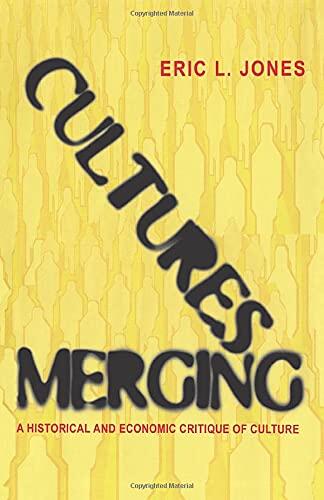
Cultures Merging: A Historical and Economic Critique of Culture
还没有评分
History
Business & Economics
格式
平装书
页数
328
语言
英语
已发布
Jun 28, 2016
出版商
Princeton University Press
版本
Reprint
ISBN-10
0691171041
ISBN-13
9780691171043
描述
In "Cultures Merging," Eric L. Jones embarks on an ambitious exploration of the intricate relationship between culture and economics throughout history. He posits that cultural exchanges have not only shaped societies but have also been pivotal in driving economic progress. Through a thorough examination of various historical contexts, he unpacks how cultural interactions have led to the transformation and evolution of ideas, practices, and economic systems.
Jones highlights the dynamic interplay between different civilizations, revealing how the merging of cultures can spark innovation and economic vitality. He draws on a wide array of historical examples, meticulously illustrating the causes and consequences of cultural amalgamation. This perspective sheds light on the often-overlooked implications of cultural diversity in shaping economies, suggesting that the richness of varied cultural backgrounds can be a catalyst for growth.
The author also critiques conventional narratives about cultural superiority and economic dominance, challenging readers to reconsider established beliefs about the linear progression of economic development. He emphasizes that economic success is frequently intertwined with the ability to embrace and integrate diverse cultural influences.
By illuminating the historical patterns of cultural merging, Jones provides a nuanced understanding of how collaboration between different cultures has fostered resilience and adaptability in economic systems. His work encourages readers to reflect on the importance of cultural exchanges in contemporary society and their potential to drive future economic prosperity.
Jones highlights the dynamic interplay between different civilizations, revealing how the merging of cultures can spark innovation and economic vitality. He draws on a wide array of historical examples, meticulously illustrating the causes and consequences of cultural amalgamation. This perspective sheds light on the often-overlooked implications of cultural diversity in shaping economies, suggesting that the richness of varied cultural backgrounds can be a catalyst for growth.
The author also critiques conventional narratives about cultural superiority and economic dominance, challenging readers to reconsider established beliefs about the linear progression of economic development. He emphasizes that economic success is frequently intertwined with the ability to embrace and integrate diverse cultural influences.
By illuminating the historical patterns of cultural merging, Jones provides a nuanced understanding of how collaboration between different cultures has fostered resilience and adaptability in economic systems. His work encourages readers to reflect on the importance of cultural exchanges in contemporary society and their potential to drive future economic prosperity.