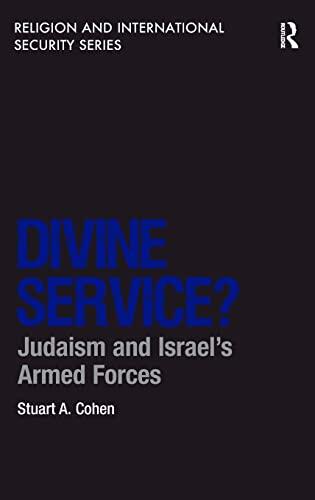
Divine Service?: Judaism and Israel's Armed Forces
还没有评分
Action & Adventure
格式
精装书
页数
210
语言
英语
已发布
Jul 28, 2013
出版商
Routledge
版本
1
ISBN-10
140946637X
ISBN-13
9781409466376
描述
Stuart A. Cohen delves deep into the complex relationship between Judaism and the Israeli armed forces, weaving a narrative that highlights the tensions and synergies that arise from their intertwined identities. This exploration reveals not just the historical roots of this relationship but also the ethical and moral dilemmas faced by service members within the military framework. Each chapter intricately dissects how religious values influence the soldiers' actions and decisions in a uniquely Israeli context.
Cohen's examination challenges readers to consider the implications of faith in a militarized society. Through engaging case studies and thoughtful analysis, he probes how the concepts of duty, sacrifice, and faith coexist, often clashing in moments of crisis. The juxtaposition of sacred beliefs with the harsh realities of warfare invites reflection on the broader questions of morality in international security.
Furthermore, the narrative illustrates how personal faith can guide soldiers not only in their spiritual lives but also in their roles as defenders of the nation. This dynamic intertwines with the broader issues of national identity and the collective conscience of a country grappling with its historical and contemporary challenges.
Ultimately, the work poses significant questions about the future of Israel's armed forces in relation to its diverse religious landscape. Cohen encourages a dialogue on the delicate balance between serving one's country and adhering to spiritual convictions, inviting readers to consider the implications of this balance in an ever-evolving geopolitical landscape.
Cohen's examination challenges readers to consider the implications of faith in a militarized society. Through engaging case studies and thoughtful analysis, he probes how the concepts of duty, sacrifice, and faith coexist, often clashing in moments of crisis. The juxtaposition of sacred beliefs with the harsh realities of warfare invites reflection on the broader questions of morality in international security.
Furthermore, the narrative illustrates how personal faith can guide soldiers not only in their spiritual lives but also in their roles as defenders of the nation. This dynamic intertwines with the broader issues of national identity and the collective conscience of a country grappling with its historical and contemporary challenges.
Ultimately, the work poses significant questions about the future of Israel's armed forces in relation to its diverse religious landscape. Cohen encourages a dialogue on the delicate balance between serving one's country and adhering to spiritual convictions, inviting readers to consider the implications of this balance in an ever-evolving geopolitical landscape.