

الوصف
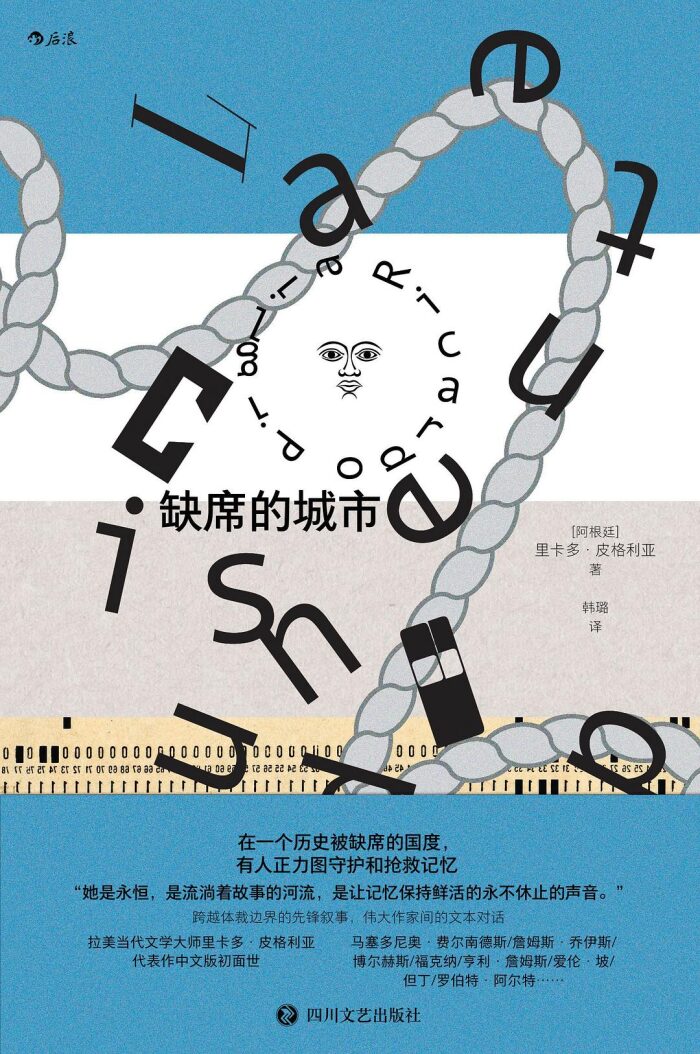
这台机器拥有一个女人的心智和灵魂,能够输出故事。它是由一个与阿根廷先锋小说家马塞多尼奥·费尔南德斯同名的人物,在心爱的女人去世后创造的,其目的是让爱人在讲述故事中获得永生。
除了个人的爱情回忆,机器还守护着流传在城市里的集体记忆。当她通过重重文本和磁带录音,影射现实、传播真相时,警察也介入进来,试图将机器捣毁。
朱尼尔在城市里四处游荡,在不同的故事中进进退退,试图解开那条总是充满等待和延宕的线索。直到有一天,他来到了世界尽头的的一座小岛上……
تفاصيل الكتاب
الأنواع
المراجعات
عرض الكل
During the last years of Ricardo Piglia's (1941–2017) life, I edited and translated various biographical materials. I had the opportunity to know him in a way more intimate than a simple reader. I recognize that he was never a restrained writer. Even in this Spanish novel, he wove together at least three storylines:
1. Firstly, there is the story involving Junior, a journalist who is simultaneously investigating the appearance and recordings produced by a contraption inside a city museum. Through this investigation, the journalist will discover his true identity.
2. The second story details the origin of this device contraption placed inside the museum: a kind of devilry, or ingenious mechanism, conceived by Macedonio Fernández and created by the engineer Emil Russo.
3. As the third and final narrative thread of the book, the writing revolves around the political history of Argentina during the military dictatorship, right after the Falklands War.
It is a narrative of parallel and complex thought. It begins with the figure of a man who cannot bear the loss of his wife: this man, a certain Macedonio Fernández, is the one who makes a pact with an engineer, who, by building a device, assures him that his wife will remain permanently alive.
Throughout the story, a conspiracy arises, whose purpose is to neutralize or destroy the "woman-device." This plot is caused by the machine itself, as it records actions or events within the museum that could reveal something anomalous: the reasons, or events, unfold inside a museum where each person can display symbols, objects, of their own life.
In the text, Ricardo Piglia included mini-stories, almost in the form of drafts. In this first print run, he described the politics during the dictatorship, the repression, Macedonio Fernández, and his Museo de la Novela Eterna.
Although the book's structure is skillfully interwoven with three main stories, which in turn are interspersed with other mini-stories, the whole forms a mosaic where distinct narrative times and spaces are alternated. The novel can be considered a network of complicated, interlocking stories. So much so that several literary critics, as well as the Argentine author who wrote the book himself, have tried to summarize and explain it repeatedly.