

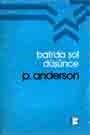
الوصف
This synoptic essay considers the nature and evolution of the Marxist theory that developed in Western Europe, after the defeat of the proletarian rebellions in the West and the isolation of the Russian Revolution in the East in the early 1920s. It focuses particularly on the work of Lukács, Korsch and Gramsci; Adorno, Marcuse and Benjamin; Sartre and Althusser; and Della Volpe and Colletti, together with other figures within Western Marxism from 1920 to 1975. The theoretical production of each of these thinkers is related simultaneously to the practical fate of working-class struggles and to the cultural mutations of bourgeois thought in their time. The philosophical antecedents of the various school within this tradition—Lukácsian, Gramscian, Frankfurt, Sartrean, Althusserian and Della Volpean—are compared, and the specific innovations of their respective systems surveyed. The structural unity of 'Western Marxism', beyond the diversity of its individual thinkers, is then assessed, in a balance-sheet that contrasts its heritage with the tradition of 'classical' Marxism that preceded it, and with the commanding problems which will confront any historical materialism to succeed it.
تفاصيل الكتاب
تنسيق
غلاف ورقي
صفحات
183 صفحات
لغة
التركية
منشور
أبريل 1, 1982
الناشر
Birikim Yayınları