

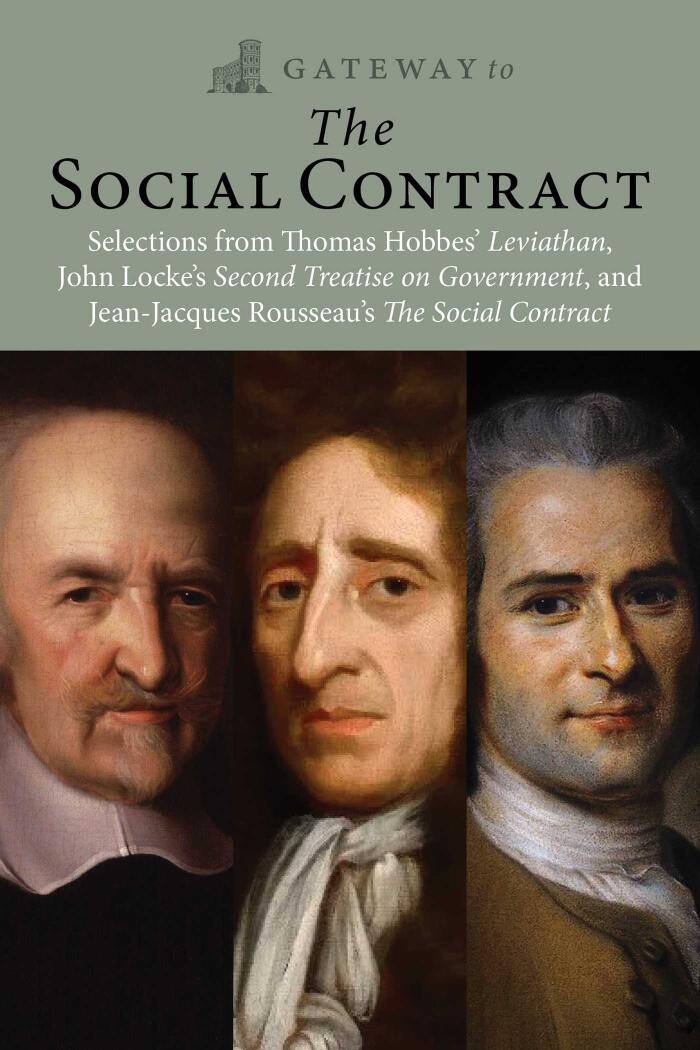
Gateway to the Social Contract: Selections from Thomas Hobbes' Leviathan, John Locke's Second Treastise on Government, and Jean-Jacques Rousseau's The Social Contract
لا توجد تقييمات بعد
Contemporary
تنسيق
غلاف ورقي
صفحات
256
لغة
الإنجليزية
منشور
Jan 20, 2026
الناشر
Gateway Editions
رقم ISBN-10
1684514517
رقم ISBN-13
9781684514519
الوصف
This collection highlights the seminal ideas presented by three influential philosophers who have shaped modern political thought. Through carefully curated selections, the reader is invited to explore the foundational concepts of social contract theory as articulated by Hobbes, Locke, and Rousseau. Each thinker provides a unique perspective on the nature of human society, governance, and the legitimacy of authority.
Hobbes presents a vision of a strong centralized authority to avoid the chaos of a state of nature, emphasizing the need for social order. In contrast, Locke argues for the protection of individual rights and the role of government as a servant of the people, championing life, liberty, and property. Rousseau, meanwhile, challenges both with his vision of a collective will, advocating for direct democracy and the importance of the common good.
By juxtaposing these distinct viewpoints, the anthology fosters a deeper understanding of the evolving concepts of freedom and governance. Readers are encouraged to reflect on the implications these theories have on contemporary society, making the work relevant not only in historical context but also in current discussions about the role of government and social responsibility.
Hobbes presents a vision of a strong centralized authority to avoid the chaos of a state of nature, emphasizing the need for social order. In contrast, Locke argues for the protection of individual rights and the role of government as a servant of the people, championing life, liberty, and property. Rousseau, meanwhile, challenges both with his vision of a collective will, advocating for direct democracy and the importance of the common good.
By juxtaposing these distinct viewpoints, the anthology fosters a deeper understanding of the evolving concepts of freedom and governance. Readers are encouraged to reflect on the implications these theories have on contemporary society, making the work relevant not only in historical context but also in current discussions about the role of government and social responsibility.