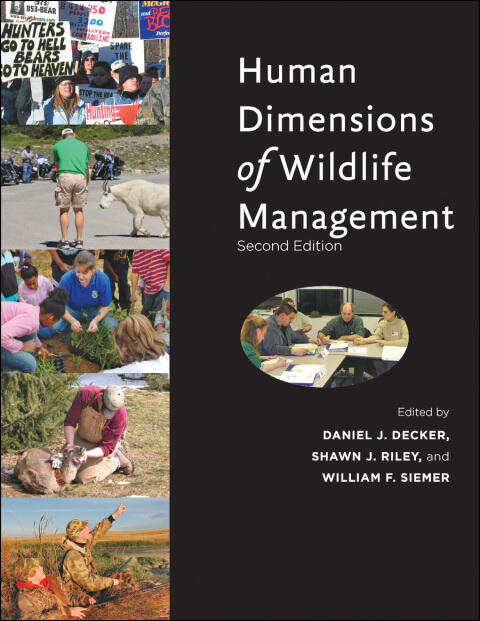
Human Dimensions of Wildlife Management
لا توجد تقييمات بعد
Science & Technology
Business & Economics
Health & Wellness
تنسيق
كيندل
صفحات
304
لغة
الإنجليزية
منشور
Jan 1, 2012
الناشر
Johns Hopkins University Press
الطبعة
second edition
رقم ISBN-10
1421407418
رقم ISBN-13
9781421407418
الوصف
Wildlife management is a complex interplay between conservation efforts and the social dimensions that accompany them. In this insightful exploration, the authors delve into the intricate relationships between human behavior, societal values, and wildlife stewardship. Daniel J. Decker, Shawn J. Riley, and William F. Siemer emphasize that understanding the human dimensions of wildlife management is crucial for developing effective strategies that resonate with communities and stakeholders.
The authors articulate how engaging local populations and recognizing their attitudes toward wildlife can lead to more sustainable management practices. They examine case studies that highlight the importance of cooperation among various interest groups, showcasing how collaborative efforts can yield positive outcomes for both wildlife and human communities. By prioritizing social-ecological systems, they advocate for an adaptable management framework that responds to changing circumstances and values.
This work serves as a vital resource for wildlife professionals, conservationists, and students alike, encouraging a more holistic view of wildlife management. It invites readers to rethink traditional approaches and incorporate the intricate human elements that are often overlooked in conservation efforts. Ultimately, this exploration aims to foster a deeper appreciation for the interconnectedness of people and nature, urging a path toward collaborative and responsible wildlife stewardship.
The authors articulate how engaging local populations and recognizing their attitudes toward wildlife can lead to more sustainable management practices. They examine case studies that highlight the importance of cooperation among various interest groups, showcasing how collaborative efforts can yield positive outcomes for both wildlife and human communities. By prioritizing social-ecological systems, they advocate for an adaptable management framework that responds to changing circumstances and values.
This work serves as a vital resource for wildlife professionals, conservationists, and students alike, encouraging a more holistic view of wildlife management. It invites readers to rethink traditional approaches and incorporate the intricate human elements that are often overlooked in conservation efforts. Ultimately, this exploration aims to foster a deeper appreciation for the interconnectedness of people and nature, urging a path toward collaborative and responsible wildlife stewardship.