

الوصف
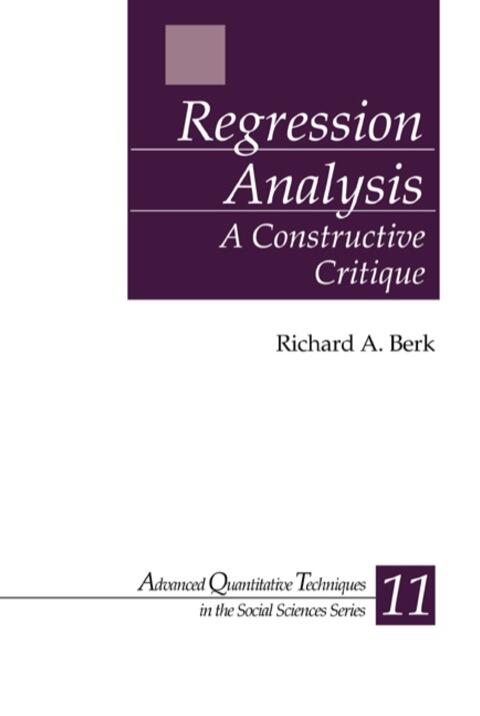
Richard A. Berk delves deep into the nuances of regression analysis, presenting a critical examination of its misuse in social science research. He sheds light on the common pitfalls and misapplications that often plague studies claiming to use regression as a tool for understanding complex social phenomena. Through his keen insights, Berk not only highlights these issues but also provides practical solutions to rectify them, ensuring that researchers can harness the full potential of regression techniques.
Berk's critique goes beyond mere identification of problems; he offers constructive advice that enables practitioners to refine their methodologies. His emphasis on responsible data analysis and clear communication of findings addresses the growing concerns about the integrity and reliability of empirical research. By advocating for transparency and rigor, Berk empowers researchers to move forward with confidence in their results.
This comprehensive exploration serves as both a warning and a guide, urging scholars to approach regression analysis with a critical mindset. It challenges the status quo, advocating for a more thoughtful engagement with quantitative techniques that can greatly enhance the validity of research outcomes in the social sciences.
Throughout his work, Berk ensures that the discussion is accessible yet deeply informative, making it relevant for both seasoned researchers and those new to the field. By fostering a greater understanding of regression's complexities, he contributes to a more nuanced dialogue on its role in shaping social science inquiry.
Berk's critique goes beyond mere identification of problems; he offers constructive advice that enables practitioners to refine their methodologies. His emphasis on responsible data analysis and clear communication of findings addresses the growing concerns about the integrity and reliability of empirical research. By advocating for transparency and rigor, Berk empowers researchers to move forward with confidence in their results.
This comprehensive exploration serves as both a warning and a guide, urging scholars to approach regression analysis with a critical mindset. It challenges the status quo, advocating for a more thoughtful engagement with quantitative techniques that can greatly enhance the validity of research outcomes in the social sciences.
Throughout his work, Berk ensures that the discussion is accessible yet deeply informative, making it relevant for both seasoned researchers and those new to the field. By fostering a greater understanding of regression's complexities, he contributes to a more nuanced dialogue on its role in shaping social science inquiry.
تفاصيل الكتاب
تنسيق
كيندل
صفحات
280 صفحات
لغة
الإنجليزية
منشور
يناير 1, 2003
الناشر
Sage Publications, inc.
الطبعة
1
الطبعات
3 طبعات
رقم ISBN-10
1452244863
رقم ISBN-13
9781452244860