

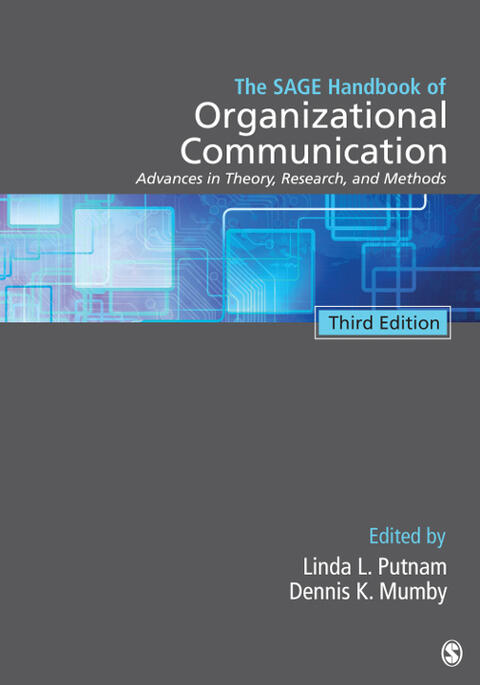
The SAGE Handbook of Organizational Communication: Advances in Theory, Research, and Methods
بواسطة
Linda L. Putnam; Dennis K. Mumby
لا توجد تقييمات بعد
تنسيق
كيندل
صفحات
848
لغة
الإنجليزية
منشور
Jan 1, 2013
الناشر
SAGE Publications, Inc
الطبعة
3
رقم ISBN-10
148331541X
رقم ISBN-13
9781483315416
الوصف
This comprehensive resource delves deep into the evolution of organizational communication, tracing the significant advancements in theory, research, and methodologies over the past three decades. Linda L. Putnam and Dennis K. Mumby, both esteemed scholars in the field, bring together contributions from a wide array of experts, resulting in a rich tapestry of insights that reflect the dynamic nature of organizational contexts.
The work highlights the pivotal role of communication within organizations, emphasizing its impact on culture, identity, and social dynamics. By addressing contemporary challenges such as technological transformation and globalization, the text serves as a crucial guide for scholars and practitioners alike who seek to navigate the complexity of modern organizations.
Readers will find an array of empirical studies and practical applications, making it an invaluable tool for researchers looking to expand their understanding of communication processes. The detailed analysis of various methodologies offers foundational knowledge for anyone interested in conducting their own investigations into organizational communication.
Overall, the book stands as a landmark publication that encapsulates the depth and breadth of the field, providing essential insights that encourage ongoing dialogue and exploration within the academic community.
The work highlights the pivotal role of communication within organizations, emphasizing its impact on culture, identity, and social dynamics. By addressing contemporary challenges such as technological transformation and globalization, the text serves as a crucial guide for scholars and practitioners alike who seek to navigate the complexity of modern organizations.
Readers will find an array of empirical studies and practical applications, making it an invaluable tool for researchers looking to expand their understanding of communication processes. The detailed analysis of various methodologies offers foundational knowledge for anyone interested in conducting their own investigations into organizational communication.
Overall, the book stands as a landmark publication that encapsulates the depth and breadth of the field, providing essential insights that encourage ongoing dialogue and exploration within the academic community.