

تفاصيل الكتاب
تنسيق
كيندل
صفحات
420
لغة
الإنجليزية
منشور
Sep 8, 2016
الوصف
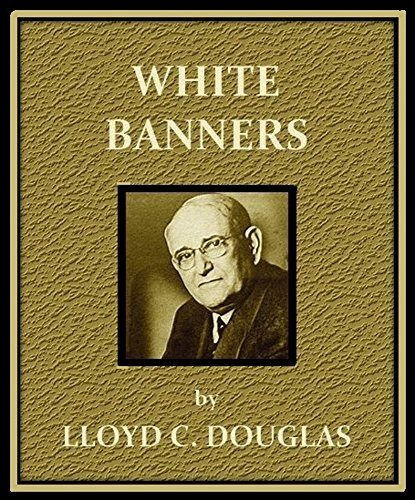
Lloyd Cassel Douglas (August 27, 1877 – February 13, 1951) born Doya C. Douglas, was an American minister and author. He was born in Columbia City, Indiana, spent part of his boyhood in Monroeville, Indiana, Wilmot, Indiana and Florence, Kentucky, where his father, Alexander Jackson Douglas, was pastor of the Hopeful Lutheran Church. According to the 1910 Census Douglas was listed as a Lutheran Clergyman. He was married to Bessie I. Porch. They had two children: Bessie J. Douglas, 4 at the time and Virginia V Douglas, 2 at the time. They employed a cook, Ms. Josephine Somach. He died in Los Angeles, California.
Douglas was one of the most popular American authors of his time, although he did not write his first novel until he was 50.
White Banners is the story of a lady (Hannah Parmalee) who self appoints herself to be a family housemaid, when the family, headed by Philosophy Professor Paul Ward, is tight for funds. She makes herself indispensable, immediately. she also has a secret past which is kept secret to all. The tale takes place in northern Indiana, much in Waterloo, Indiana, and mentions early the midsummer of 1916 and before the final page, the Wall Street Crash of 1929.
Extract:
..."Paul was in gay spirits at dinner. Marcia could not remember when he had been so unaccountably incandescent, certainly not for a year or more, and strongly hinted that she would be glad to rejoice with him if she knew what it was about. He seemed to be hugging a secret. It was not an unprecedented mood. Usually, as Christmas or her birthday approached, he slyly made pretence of torturing her curiosity with suppressed tidings of great joy, a boyish whimsy she tried to play up to with protestations that it wasn't fair, but privately alarmed for fear some preposterous extravagance, indulged in for her delight, would bring down on their hapless house a dismaying epidemic of bill-collectors representing the merchants whose monthly statements lay in her desk with a rubber band around them and a lot of menace in them.
And so often—how she despised herself for thinking this, but, my Sainted Uncle! wasn't it true?—the extravagant gifts were things utterly unusable. The fitted over-night bag, a-sparkle with silver-plated trinkets: how long had it been since she had had occasion to carry an over-night bag! The electric egg-boiler on a Sheffield tray! The morocco-cased traveller's clock! And the black velvet evening wrap with cheap white fur fuzzing. She had actually laughed at that: an evening wrap. She hadn't had an evening gown since her wedding. She pictured herself at a party, doffing her new black velvet coat and letting her hostess see what she had on under it. She laughed, and cried, after she had told Paul it was exactly what she had been wanting. Surely whatever old fellow it was had written in the Bible, "Love beareth and endureth all things", must have had a pretty good head—for a prophet...."
Douglas was one of the most popular American authors of his time, although he did not write his first novel until he was 50.
White Banners is the story of a lady (Hannah Parmalee) who self appoints herself to be a family housemaid, when the family, headed by Philosophy Professor Paul Ward, is tight for funds. She makes herself indispensable, immediately. she also has a secret past which is kept secret to all. The tale takes place in northern Indiana, much in Waterloo, Indiana, and mentions early the midsummer of 1916 and before the final page, the Wall Street Crash of 1929.
Extract:
..."Paul was in gay spirits at dinner. Marcia could not remember when he had been so unaccountably incandescent, certainly not for a year or more, and strongly hinted that she would be glad to rejoice with him if she knew what it was about. He seemed to be hugging a secret. It was not an unprecedented mood. Usually, as Christmas or her birthday approached, he slyly made pretence of torturing her curiosity with suppressed tidings of great joy, a boyish whimsy she tried to play up to with protestations that it wasn't fair, but privately alarmed for fear some preposterous extravagance, indulged in for her delight, would bring down on their hapless house a dismaying epidemic of bill-collectors representing the merchants whose monthly statements lay in her desk with a rubber band around them and a lot of menace in them.
And so often—how she despised herself for thinking this, but, my Sainted Uncle! wasn't it true?—the extravagant gifts were things utterly unusable. The fitted over-night bag, a-sparkle with silver-plated trinkets: how long had it been since she had had occasion to carry an over-night bag! The electric egg-boiler on a Sheffield tray! The morocco-cased traveller's clock! And the black velvet evening wrap with cheap white fur fuzzing. She had actually laughed at that: an evening wrap. She hadn't had an evening gown since her wedding. She pictured herself at a party, doffing her new black velvet coat and letting her hostess see what she had on under it. She laughed, and cried, after she had told Paul it was exactly what she had been wanting. Surely whatever old fellow it was had written in the Bible, "Love beareth and endureth all things", must have had a pretty good head—for a prophet...."
الأنواع
دين وروحانيات
تاريخ