

Beschreibung
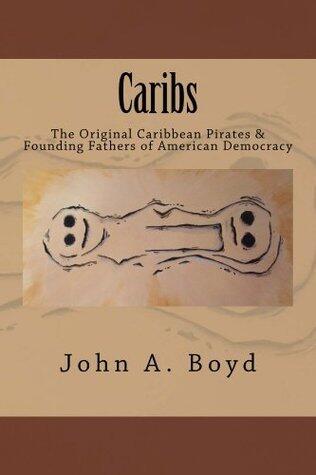
This story of Carib resistance to the European conquest of the Caribbean starts in 1493 at the battle of Salt River, St. Croix, United States Virgin Islands. By all historical accounts, the Caribs tried to avoid this battle and when attacked, lost to a superior force of well armed Conquistadors. For the next 55 years, the Caribs of St. Croix sought revenge and engaged in pirate raids and guerrilla warfare against the Spanish. They are credited with delaying the large scale settlement of Puerto Rico for almost 100 years and the Spanish never occupied St. Croix except for three months in 1650.
Their war parties operated with universal male suffrage and they elected war leaders for their stealth attacks. Around 1529, the Caribs started cooperating with English, Dutch and French pirates, privateers, filibusters, freebooters and buccaneers in their attacks against the common Spanish enemy. They taught the European how to smoke meats, build houses, live off the land and their way of life.
These exchanges were mutually beneficial as before 1600, the Caribs adapted to iron tools for boat building and using the power of sail on their war canoes. The European pirates learned about stealth nighttime raids, avoiding direct confrontation with the enemy, terrorizing their opponents during battles, fraternal brotherhood and the principles of democracy and universal male suffrage.
Contrary to popular belief, universal male suffrage started in a few Amerindian Cultures before Columbus, was passed to the pirates and did not get carried to Europe and the United Stated until the nineteenth Century. Most Europeans who became pirates had never voted in their life because they were ineligible due to poverty and would not have understood the concept without their contact with the Caribs.
Because of their warrior skills and cooperation with the Europeans (other than the Spanish), the egalitarian tribes of Central America and the Caribbean were able to retain some degree of sovereignty until moder times. These independent groups include the Island Caribs of Dominica, the Garfuna (Black Caribs) of Roatán, the Kuna (mainland Caribs) of Panama and the Miskito of Nicaragua.
Their war parties operated with universal male suffrage and they elected war leaders for their stealth attacks. Around 1529, the Caribs started cooperating with English, Dutch and French pirates, privateers, filibusters, freebooters and buccaneers in their attacks against the common Spanish enemy. They taught the European how to smoke meats, build houses, live off the land and their way of life.
These exchanges were mutually beneficial as before 1600, the Caribs adapted to iron tools for boat building and using the power of sail on their war canoes. The European pirates learned about stealth nighttime raids, avoiding direct confrontation with the enemy, terrorizing their opponents during battles, fraternal brotherhood and the principles of democracy and universal male suffrage.
Contrary to popular belief, universal male suffrage started in a few Amerindian Cultures before Columbus, was passed to the pirates and did not get carried to Europe and the United Stated until the nineteenth Century. Most Europeans who became pirates had never voted in their life because they were ineligible due to poverty and would not have understood the concept without their contact with the Caribs.
Because of their warrior skills and cooperation with the Europeans (other than the Spanish), the egalitarian tribes of Central America and the Caribbean were able to retain some degree of sovereignty until moder times. These independent groups include the Island Caribs of Dominica, the Garfuna (Black Caribs) of Roatán, the Kuna (mainland Caribs) of Panama and the Miskito of Nicaragua.
Buchdetails
Format
Kindle
Seiten
366 Seiten
Sprache
Englisch
Veröffentlicht
Apr 15, 2013