

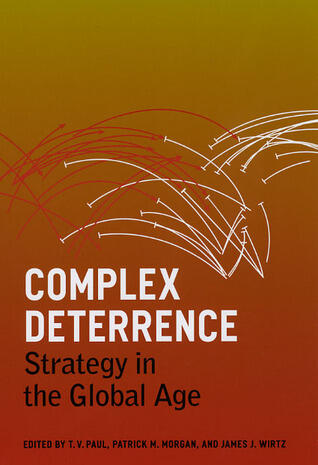
Buchdetails
Format
Taschenbuch
Seiten
345
Sprache
Englisch
Veröffentlicht
Sep 1, 2009
Verlag
University of Chicago Press
ISBN-10
0226650030
ISBN-13
9780226650036
Beschreibung
In an era marked by shifting global dynamics, the authors delve into the intricate web of deterrence strategies that nations employ to navigate international tensions. They explore how traditional approaches to conflict management are evolving, particularly in response to the repercussions of recent military engagements. Through a thorough analysis, the text highlights the complexities and moral ambiguities inherent in modern strategic decision-making.
The authors examine case studies from various geopolitical contexts, revealing how states weigh the risks and benefits of force versus diplomacy. They argue that reliance on outdated paradigms, like preemptive strikes, often leads to unintended consequences, prompting a reevaluation of what effective deterrence truly entails. By outlining the nuances of coercion and deterrence, they provide a compelling argument for more adaptable and context-sensitive strategies.
Furthermore, the book underscores the importance of multilateralism in today's interconnected world. It emphasizes how cooperative frameworks can enhance security while minimizing the potential for conflict escalation. Readers are invited to consider the implications of these strategies on global stability amidst rising nationalism and regional disputes.
Ultimately, the authors offer a fresh perspective on how nations can harmonize their strategic objectives with ethical considerations, proposing that a deeper understanding of complex deterrence is crucial for fostering peace in an increasingly volatile global landscape.
The authors examine case studies from various geopolitical contexts, revealing how states weigh the risks and benefits of force versus diplomacy. They argue that reliance on outdated paradigms, like preemptive strikes, often leads to unintended consequences, prompting a reevaluation of what effective deterrence truly entails. By outlining the nuances of coercion and deterrence, they provide a compelling argument for more adaptable and context-sensitive strategies.
Furthermore, the book underscores the importance of multilateralism in today's interconnected world. It emphasizes how cooperative frameworks can enhance security while minimizing the potential for conflict escalation. Readers are invited to consider the implications of these strategies on global stability amidst rising nationalism and regional disputes.
Ultimately, the authors offer a fresh perspective on how nations can harmonize their strategic objectives with ethical considerations, proposing that a deeper understanding of complex deterrence is crucial for fostering peace in an increasingly volatile global landscape.
Genres
Wissenschaft & Technologie
Zeitgenössisch