

Buchdetails
Format
Gebundene Ausgabe
Seiten
281
Sprache
Englisch
Veröffentlicht
Jan 1, 1992
Verlag
Temple Univ Pr
ISBN-10
0877229155
ISBN-13
9780877229155
Beschreibung
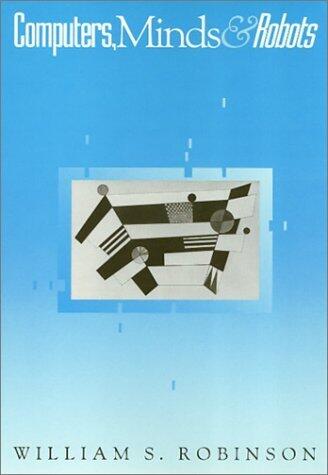
In Computers, Minds, and Robots, William S. Robinson offers a clear and lively discussion of the philosophical problems that surround the developing science of Artificial Intelligence (AI). He introduces and clarifies the basic concepts necessary for understanding these problems and discusses opposing views and possible solutions to the problems. Robinson describes the kinds of further research that seem likely to improve our understanding of the mechanisms of intelligence. He also explains the new "connectionist" approach to AI and relates it to the more traditional approach.
This book is not a typical monograph on the latest developments in computer or robot technologies. Instead, Robinson poses philosophical questions about the nature of Al. For example, if we had a machine that could perform intelligent tasks--do arithmetic, solve a chess problem, write a poem--what would that show about whether the machine could think or feel? What does our knowledge of mathematics imply about our own thinking processes? Does the fact that we can do certain things imply anything about how we do them? Likewise, if a machine can do certain things, does that ability imply anything about its own level of intelligence?
Robinson uses two famous rooms--the Turing test set-up and Searle's Chinese Room--to introduce questions of current interest about artificial intelligence. Imaginary robots help clarify relationships between different mental processes. He examines an argument that some believe to show the impossibility of a robot that is a person's double, and he explains two major approaches that others think might someday make such a robot doppelganger conceivable.
This book is not a typical monograph on the latest developments in computer or robot technologies. Instead, Robinson poses philosophical questions about the nature of Al. For example, if we had a machine that could perform intelligent tasks--do arithmetic, solve a chess problem, write a poem--what would that show about whether the machine could think or feel? What does our knowledge of mathematics imply about our own thinking processes? Does the fact that we can do certain things imply anything about how we do them? Likewise, if a machine can do certain things, does that ability imply anything about its own level of intelligence?
Robinson uses two famous rooms--the Turing test set-up and Searle's Chinese Room--to introduce questions of current interest about artificial intelligence. Imaginary robots help clarify relationships between different mental processes. He examines an argument that some believe to show the impossibility of a robot that is a person's double, and he explains two major approaches that others think might someday make such a robot doppelganger conceivable.
Genres
Wissenschaft & Technologie
Natur