Beschreibung
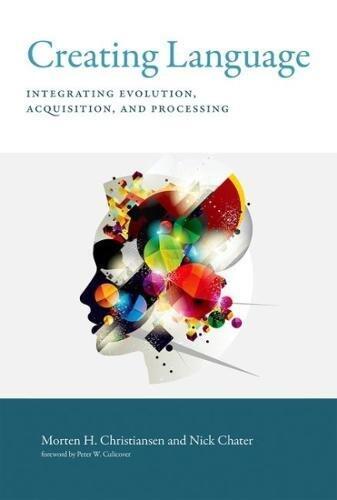
Language stands as a defining characteristic of humanity, showcasing an extraordinary blend of flexibility and depth in communication. In a comprehensive exploration of this fundamental aspect of human existence, two esteemed scholars delve into the complex interplay between the evolution of language, its acquisition, and cognitive processing. They examine how these interconnected elements have shaped not only the linguistic capabilities of individuals but also the broader cultural landscape.
Drawing from a wealth of interdisciplinary research, the authors illuminate how the processes of language development are not merely biological but entwined with cognitive and social factors. They consider the implications of language evolution on our understanding of human cognition, revealing how the way we learn and use language has profound effects on thought and perception. This creates a rich tapestry of insights for readers interested in linguistics, psychology, and anthropology.
Throughout the narrative, insights are offered into the mechanisms that underlie the learning of languages, detailing how children acquire linguistic skills and how these skills reflect our evolutionary history. Readers are invited to contemplate the remarkable adaptability of language in diverse contexts and its role in shaping human interaction.
This work prompts a reevaluation of traditional notions surrounding language, pushing the boundaries of how we perceive its existence and significance in our lives. As the authors weave together theories and empirical evidence, they provide a compelling narrative that highlights the intricate processes that contribute to one of humanity's greatest achievements: the ability to communicate in a richly nuanced and endlessly creative way.
Drawing from a wealth of interdisciplinary research, the authors illuminate how the processes of language development are not merely biological but entwined with cognitive and social factors. They consider the implications of language evolution on our understanding of human cognition, revealing how the way we learn and use language has profound effects on thought and perception. This creates a rich tapestry of insights for readers interested in linguistics, psychology, and anthropology.
Throughout the narrative, insights are offered into the mechanisms that underlie the learning of languages, detailing how children acquire linguistic skills and how these skills reflect our evolutionary history. Readers are invited to contemplate the remarkable adaptability of language in diverse contexts and its role in shaping human interaction.
This work prompts a reevaluation of traditional notions surrounding language, pushing the boundaries of how we perceive its existence and significance in our lives. As the authors weave together theories and empirical evidence, they provide a compelling narrative that highlights the intricate processes that contribute to one of humanity's greatest achievements: the ability to communicate in a richly nuanced and endlessly creative way.
Buchdetails
Format
Gebundene Ausgabe
Seiten
344 Seiten
Sprache
Englisch
Veröffentlicht
Mär 18, 2016
Verlag
The MIT Press
Ausgabe
1
Ausgaben
3 Ausgaben
ISBN-10
026203431X
ISBN-13
9780262034319



![Reports of Cases Argued and Ruled at Nisi Prius, in the Courts of King's Bench & Common Pleas, and on the Circuit Volume 8; From the Sittings in Michaelmas Term, 1823, to [Easter Term, 4 Vict. 1841]](https://images.bookpine.com/4b9c594d-4d58-43b5-97ae-8e008aaad771.jpg)