

Beschreibung
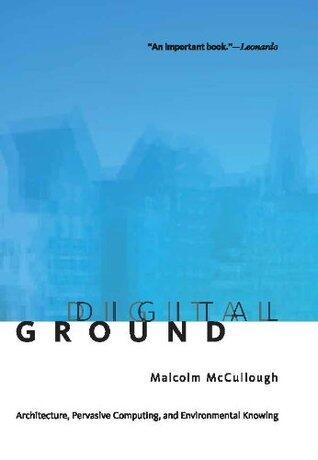
Digital Ground is an architect's response to the design challenge posed by pervasive computing. One century into the electronic age, people have become accustomed to interacting indirectly, mediated through networks. But now as digital technology becomes invisibly embedded in everyday things, even more activities become mediated, and networks extend rather than replace architecture. The young field of interaction design reflects not only how people deal with machine interfaces but also how people deal with each other in situations where interactivity has become ambient. It shifts previously utilitarian digital design concerns to a cultural level, adding notions of premise, appropriateness, and appreciation.
Malcolm McCullough offers an account of the intersections of architecture and interaction design, arguing that the ubiquitous technology does not obviate the human need for place. His concept of "digital ground" expresses an alternative to anytime-anyplace sameness in computing; he shows that context not only shapes usability but ideally becomes the subject matter of interaction design and that "environmental knowing" is a process that technology may serve and not erode.
Drawing on arguments from architecture, psychology, software engineering, and geography, writing for practicing interaction designers, pervasive computing researchers, architects, and the general reader on digital culture, McCullough gives us a theory of place for interaction design. Part I, "Expectations," explores our technological predispositions -- many of which ("situated interactions") arise from our embodiment in architectural settings. Part II, "Technologies," discusses hardware, software, and applications, including embedded technology ("bashing the desktop"), and building technology genres around life situations. Part III, "Practices," argues for design as a liberal art, seeing interactivity as a cultural -- not only technological -- challenge and a practical notion of place as essential. Part IV, "Epilogue," acknowledges the epochal changes occurring today, and argues for the role of "digital ground" in the necessary adaptation.
Malcolm McCullough offers an account of the intersections of architecture and interaction design, arguing that the ubiquitous technology does not obviate the human need for place. His concept of "digital ground" expresses an alternative to anytime-anyplace sameness in computing; he shows that context not only shapes usability but ideally becomes the subject matter of interaction design and that "environmental knowing" is a process that technology may serve and not erode.
Drawing on arguments from architecture, psychology, software engineering, and geography, writing for practicing interaction designers, pervasive computing researchers, architects, and the general reader on digital culture, McCullough gives us a theory of place for interaction design. Part I, "Expectations," explores our technological predispositions -- many of which ("situated interactions") arise from our embodiment in architectural settings. Part II, "Technologies," discusses hardware, software, and applications, including embedded technology ("bashing the desktop"), and building technology genres around life situations. Part III, "Practices," argues for design as a liberal art, seeing interactivity as a cultural -- not only technological -- challenge and a practical notion of place as essential. Part IV, "Epilogue," acknowledges the epochal changes occurring today, and argues for the role of "digital ground" in the necessary adaptation.
Buchdetails
Format
Kindle
Seiten
290 Seiten
Sprache
Englisch
Veröffentlicht
Sep 23, 2005
Verlag
The MIT Press
Ausgaben
3 editions