

Beschreibung
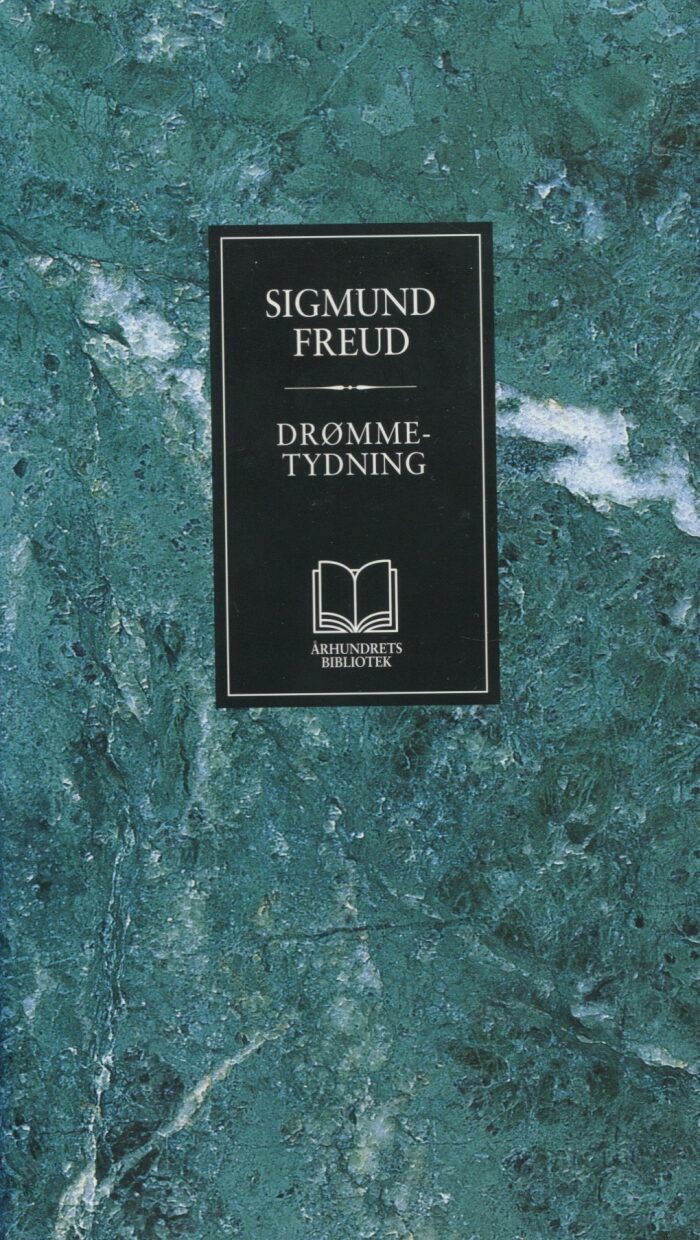
The Interpretation of Dreams 1st appeared in German in 11/1899 as Die Traumdeutung (publisher postdated 1900). Publication inaugurated the theory of Freudian dream analysis, which he described as "the royal road to the understanding of unconscious mental processes", promising to "demonstrate that there is a psychological technique which makes it possible to interpret dreams, & that on the application of this technique, every dream will reveal itself as a psychological structure, full of significance, & one which may be assigned to a specific place in the psychic activities of the waking state. Further, I shall endeavour to elucidate the processes which underlie the strangeness & obscurity of dreams, & to deduce from these processes the nature of the psychic forces whose conflict or cooperation is responsible for our dreams."
The book introduces the ego & describes a theory of the unconscious as regards dream interpretation. Dreams are forms of wish-fulfillment—attempts by the unconscious to resolve conflicts, whether recent or from the past (Beyond the Pleasure Principle discusses dreams which don't appear to be such). Because the information in the unconscious is in an unruly, often disturbing form, a preconscious censor won't allow it to pass unaltered to consciousness. While still attentive, the censor is more lax in sleep than in waking hours. Thus the unconscious must distort the meaning of its information to make it past the censor. As such, dream images often aren't what they appear to be & need analysis.
Freud makes his argument by 1st reviewing previous work on dream analysis, found to be interesting but inadequate. He then describes dreams which illustrate his theory. Many of these dreams are his own—his method is inaugurated with an analysis of his "Irma's injection" dream. Others come from case studies. Many of his sources for analysis are literary. The book is as much a self-conscious attempt at literary analysis as it's a psychological study. He also 1st discusses what would later become the Oedipus complex theory.
It took years to sell the 1st 600 copies. Freud revised the book at least eight times. The 3rd edition added a section which treated dream symbolism literally, following Wilhelm Stekel's influence. Later psychoanalysts have been frustrated with this section, as it encouraged the notion that dream interpretation was a straightforward hunt for symbols of sex. (Example: "Steep inclines, ladders & stairs, & going up or down them, are symbolic representations of the sexual act.") These approaches have been largely abandoned.
By many considered to be his most important contribution to psychology, Freud said of it, "Insight such as this falls to one's lot but once in a lifetime."
Bjørn Roggenbihl (Design)
The book introduces the ego & describes a theory of the unconscious as regards dream interpretation. Dreams are forms of wish-fulfillment—attempts by the unconscious to resolve conflicts, whether recent or from the past (Beyond the Pleasure Principle discusses dreams which don't appear to be such). Because the information in the unconscious is in an unruly, often disturbing form, a preconscious censor won't allow it to pass unaltered to consciousness. While still attentive, the censor is more lax in sleep than in waking hours. Thus the unconscious must distort the meaning of its information to make it past the censor. As such, dream images often aren't what they appear to be & need analysis.
Freud makes his argument by 1st reviewing previous work on dream analysis, found to be interesting but inadequate. He then describes dreams which illustrate his theory. Many of these dreams are his own—his method is inaugurated with an analysis of his "Irma's injection" dream. Others come from case studies. Many of his sources for analysis are literary. The book is as much a self-conscious attempt at literary analysis as it's a psychological study. He also 1st discusses what would later become the Oedipus complex theory.
It took years to sell the 1st 600 copies. Freud revised the book at least eight times. The 3rd edition added a section which treated dream symbolism literally, following Wilhelm Stekel's influence. Later psychoanalysts have been frustrated with this section, as it encouraged the notion that dream interpretation was a straightforward hunt for symbols of sex. (Example: "Steep inclines, ladders & stairs, & going up or down them, are symbolic representations of the sexual act.") These approaches have been largely abandoned.
By many considered to be his most important contribution to psychology, Freud said of it, "Insight such as this falls to one's lot but once in a lifetime."
Bjørn Roggenbihl (Design)
Buchdetails
Format
Gebundene Ausgabe
Seiten
590 Seiten
Sprache
Norwegisch
Veröffentlicht
Jan 1, 2000
Verlag
De norske Bokklubbene A/S
Ausgaben
519 Ausgaben
ISBN-10
8252541321