

Buchdetails
Format
Taschenbuch
Seiten
256
Sprache
Englisch
Veröffentlicht
Jun 18, 2012
Verlag
Hymns Ancient & Modern Ltd
ISBN-10
1859310249
ISBN-13
9781859310243
Beschreibung
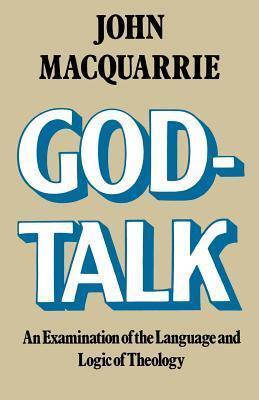
he book has a genuine unity, and I can think of no better introduction for theological students to the variety of problems about language which confront the contemporary theologian. Analytical philosophy, existentialism, the problems of biblical criticism and those of continental neo-Protestant theology are allowed to contribute to a single argument in which Macquarrie is able to pose the problems of man's likeness to God and of anthropomorphism with a welcome degree of precision. Macquanle's strength is that he is straightforwardly writing from within theology. His exposition of Saint Athanasius on the Incarnation propounds squarely the claim that Christianity entails empirical judgments, that in principle at
least it is refutable by the facts, if they are of one kind rather than another' (Alasdair MacIntyre in The Guardian).
'He lucidly explains the issues raised for Christian belief both by empiricist analytical philosophy and by existentialist hermeneutics. The hermerteutical question is brilliantly illuminated by an exposition of Athanasius's De Incamatione, and all the problems of mythology, symbolic language, analogy and paradox are carefully sorted out' (Alan Richardson in Theology).
'Following the lead of the later Wittgenstein, Macquarrie holds that we must allow each linguistic form to disclose its own logic. The dominant characteristic of all religious and theological language is its obliqueness. It speaks in terms of myth, symbol and analogy. Macquarrie . makes it plain that existentialist interpretation cannot exhaust the meaning of theological language. He clearly sees that if theology can be totally interpreted in this way, then it is reduced to anthropology. We must progress through existential interpretation to ontology--to talk about the transcendent Being of God.... The book does not finally solve the problems which it raises and does not claim to. But it develops a very promising manner of tackling them. Above all it is a very timely counter-poise to those over-facile analyses of the logic of theology which result in a kind of Christian atheism. John Macquarrie seems to me to grow in both spiritual and intellectual stature with every book he writes' (The Expository Times).
least it is refutable by the facts, if they are of one kind rather than another' (Alasdair MacIntyre in The Guardian).
'He lucidly explains the issues raised for Christian belief both by empiricist analytical philosophy and by existentialist hermeneutics. The hermerteutical question is brilliantly illuminated by an exposition of Athanasius's De Incamatione, and all the problems of mythology, symbolic language, analogy and paradox are carefully sorted out' (Alan Richardson in Theology).
'Following the lead of the later Wittgenstein, Macquarrie holds that we must allow each linguistic form to disclose its own logic. The dominant characteristic of all religious and theological language is its obliqueness. It speaks in terms of myth, symbol and analogy. Macquarrie . makes it plain that existentialist interpretation cannot exhaust the meaning of theological language. He clearly sees that if theology can be totally interpreted in this way, then it is reduced to anthropology. We must progress through existential interpretation to ontology--to talk about the transcendent Being of God.... The book does not finally solve the problems which it raises and does not claim to. But it develops a very promising manner of tackling them. Above all it is a very timely counter-poise to those over-facile analyses of the logic of theology which result in a kind of Christian atheism. John Macquarrie seems to me to grow in both spiritual and intellectual stature with every book he writes' (The Expository Times).
Genres
Philosophie
Zeitgenössisch