Buchdetails
Format
Gebundene Ausgabe
Seiten
256
Sprache
Englisch
Veröffentlicht
Mar 22, 2023
Verlag
Lexington Books
ISBN-10
1666926272
ISBN-13
9781666926279
Beschreibung
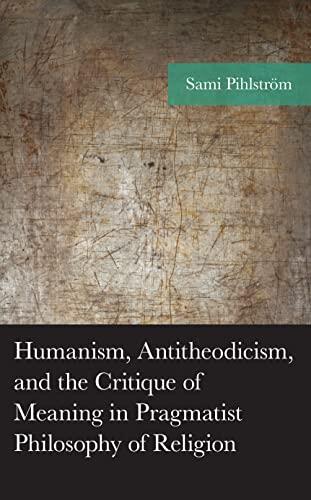
Sami Pihlstrom delves into the intricate interplay between humanism and pragmatist philosophy of religion, illuminating how these concepts interact with the widely discussed issue of meaning. He examines the philosophical implications of antitheodicism, a perspective that challenges traditional notions of God’s goodness in the face of suffering and evil. Through this lens, Pihlstrom engages with significant figures in pragmatist thought and critically assesses their contributions to understanding human existence and morality.
The author argues for a human-centered approach to philosophical inquiry, suggesting that meaning is crafted through human experiences rather than divine dictate. His exploration invites readers to reconsider their views on spirituality and the roles that human agency and ethical considerations play in shaping beliefs. By grounding these discussions in the pragmatist tradition, Pihlstrom offers a fresh perspective that resonates with contemporary debates in philosophy, religion, and ethics.
Throughout the work, a deep engagement with historical and modern thinkers provides a robust framework for Pihlstrom's critiques. He navigates complex philosophical arguments with clarity, enabling readers to grasp the nuances of his analysis. The interplay between suffering, meaning, and human experience becomes a focal point, pushing readers to reflect on their own beliefs and the sources of their understanding.
Ultimately, Pihlstrom's examination serves as a compelling invitation to rethink the place of humanism within the broader discourse of religion and meaning. By offering an antitheodic perspective, he challenges established assumptions, leading to profound implications for both personal faith and collective ethical practices.
The author argues for a human-centered approach to philosophical inquiry, suggesting that meaning is crafted through human experiences rather than divine dictate. His exploration invites readers to reconsider their views on spirituality and the roles that human agency and ethical considerations play in shaping beliefs. By grounding these discussions in the pragmatist tradition, Pihlstrom offers a fresh perspective that resonates with contemporary debates in philosophy, religion, and ethics.
Throughout the work, a deep engagement with historical and modern thinkers provides a robust framework for Pihlstrom's critiques. He navigates complex philosophical arguments with clarity, enabling readers to grasp the nuances of his analysis. The interplay between suffering, meaning, and human experience becomes a focal point, pushing readers to reflect on their own beliefs and the sources of their understanding.
Ultimately, Pihlstrom's examination serves as a compelling invitation to rethink the place of humanism within the broader discourse of religion and meaning. By offering an antitheodic perspective, he challenges established assumptions, leading to profound implications for both personal faith and collective ethical practices.
Genres
Religion & Spiritualität
Philosophie

![The old Palatine church : together with a description of the Gen. John Cochran house, also articles on the early Klock and Nellis pioneers 1930 [Leather Bound]](https://images.bookpine.com/f9169d99-2f47-403b-86bc-c5b816b6214a.jpg)