

Buchdetails
Format
Taschenbuch
Seiten
224
Sprache
Englisch
Veröffentlicht
Jul 15, 2016
Verlag
Reaktion Books
ISBN-10
1780235852
ISBN-13
9781780235851
Beschreibung
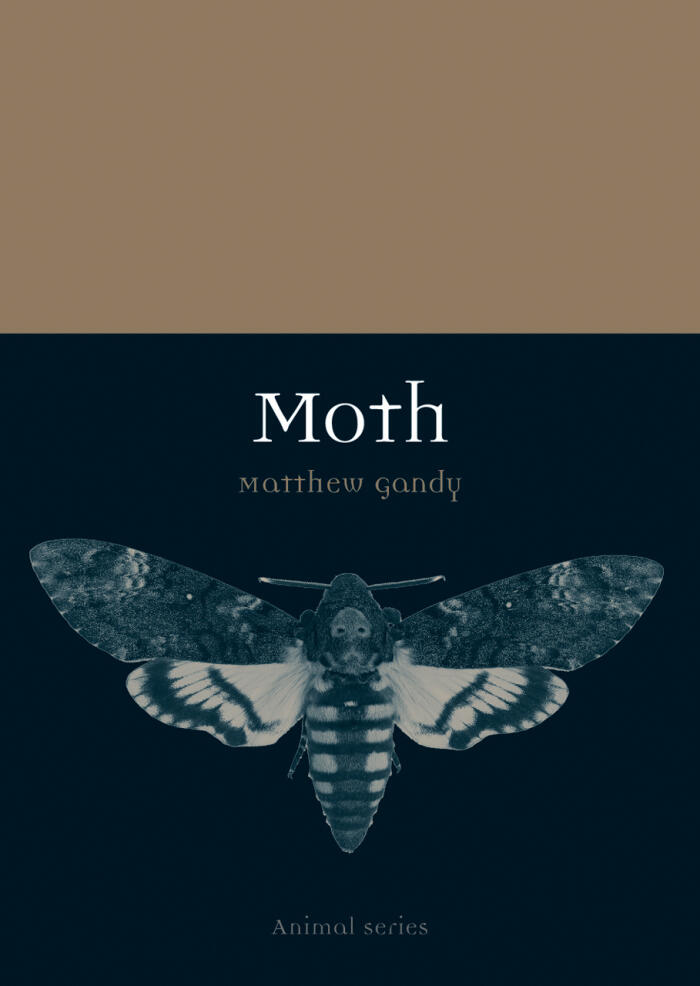
Unlike their gaudy day-flying cousins, moths seem to reside in the shadows as denizens of the night, circling around streetlights or caught momentarily in the glare of headlights on a country lane. As Matthew Gandy demonstrates in this book, however, there are many more species of day-flying moths than there are butterflies, and many rival butterflies in a dazzling range of markings.
Gandy shows that the study of moths formed an integral part of early natural history. Many thousands of drawings, paintings, and physical specimens remain in museum collections, and in recent years there has been a renewed surge of interest facilitated by advances in digital photography, the internet, and new cartographic projects that have enabled direct collaboration between amateur experts and scientific research projects. He explores the rich history of vernacular names, which speaks to a significant place for moths in early cultures of nature. Names such as the Merveille-du-Jour, the Green Brindled Crescent, or the Clifden Nonpareil evoke a sense of wonder that connects disparate fields such as folklore, the history of place, and early scientific texts. With wingspans ranging in size from a few millimetres to nearly a foot, moths display an extraordinary diversity of evolutionary adaptions, which Gandy captures here.
Gandy shows that the study of moths formed an integral part of early natural history. Many thousands of drawings, paintings, and physical specimens remain in museum collections, and in recent years there has been a renewed surge of interest facilitated by advances in digital photography, the internet, and new cartographic projects that have enabled direct collaboration between amateur experts and scientific research projects. He explores the rich history of vernacular names, which speaks to a significant place for moths in early cultures of nature. Names such as the Merveille-du-Jour, the Green Brindled Crescent, or the Clifden Nonpareil evoke a sense of wonder that connects disparate fields such as folklore, the history of place, and early scientific texts. With wingspans ranging in size from a few millimetres to nearly a foot, moths display an extraordinary diversity of evolutionary adaptions, which Gandy captures here.
Genres
Geschichte
Kunst & Fotografie