

Beschreibung
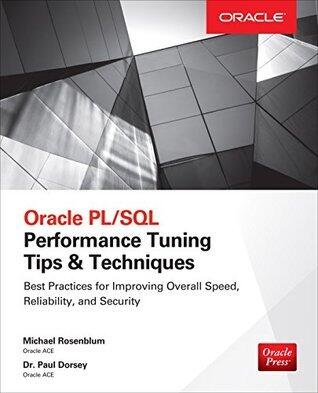
Proven PL/SQL Optimization SolutionsIn Oracle PL/SQL Performance Tuning Tips & Techniques, Oracle ACE authors with decades of experience building complex production systems for government, industry, and educational organizations present a hands-on approach to enabling optimal results from PL/SQL. The book begins by describing the discovery process required to pinpoint performance problems and then provides measurable and repeatable test cases. In-depth coverage of linking SQL and PL/SQL is followed by deep dives into essential Oracle Database performance tuning tools. Real-world examples and best practices are included throughout this Oracle Press guide.
Follow a request-driven nine-step process to identify and address performance problems in web applicationsUse performance-related database tools, including data dictionary views, logging, tracing, PL/SQL Hierarchical Profiler, PL/Scope, and RUNSTATSInstrument code to pinpoint performance issues using call stack APIs, error stack APIs, and timing markersEmbed PL/SQL in SQL and manage user-defined functionsEmbed SQL in PL/SQL using a set-based approach to handle large volumes of dataProperly write and deploy data manipulation language triggers to avoid performance problemsWork with advanced datatypes, including LOBs and XMLUse caching techniques to avoid redundant operationsEffectively use dynamic SQL to reduce the amount of code needed and streamline system managementManage version control and ensure that performance fixes are successfully deployedCode examples in the book are available for download.
Follow a request-driven nine-step process to identify and address performance problems in web applicationsUse performance-related database tools, including data dictionary views, logging, tracing, PL/SQL Hierarchical Profiler, PL/Scope, and RUNSTATSInstrument code to pinpoint performance issues using call stack APIs, error stack APIs, and timing markersEmbed PL/SQL in SQL and manage user-defined functionsEmbed SQL in PL/SQL using a set-based approach to handle large volumes of dataProperly write and deploy data manipulation language triggers to avoid performance problemsWork with advanced datatypes, including LOBs and XMLUse caching techniques to avoid redundant operationsEffectively use dynamic SQL to reduce the amount of code needed and streamline system managementManage version control and ensure that performance fixes are successfully deployedCode examples in the book are available for download.
Buchdetails
Format
Kindle
Seiten
461 Seiten
Sprache
Englisch
Veröffentlicht
Aug 29, 2014
Verlag
McGraw Hill
Ausgaben
2 Ausgaben
ISBN-10
0071822186
ISBN-13
9780071822183