

Buchdetails
Format
Kindle
Seiten
278
Sprache
Englisch
Veröffentlicht
Dec 2, 2014
Verlag
Routledge
ISBN-10
1136217215
ISBN-13
9781136217210
Beschreibung
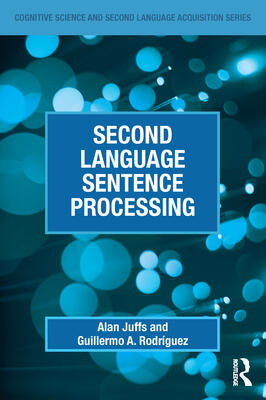
This book delves into the intricate dynamics of second language sentence processing, blending insights from cognitive science with language acquisition theories. Alan Juffs and Guillermo A Rodriguez explore how learners navigate the complexities of constructing and understanding sentences in a new language. Through a detailed analysis, they present a framework that illuminates the cognitive mechanisms at play in parsing and producing language.
The authors draw from a wealth of research, providing a rich discussion on the challenges faced by learners at various proficiency levels. By examining different methodologies and experimental findings, they offer a nuanced perspective that highlights both individual differences and the universal processes involved in language learning. This exploration helps unpack the cognitive burden second language learners experience, addressing how these factors impact their overall language proficiency.
With a focus on empirical evidence, the book aims to bridge the gap between theory and practice. It encourages educators and researchers to consider the cognitive processes underlying language learning, potentially transforming teaching approaches and enhancing instructional strategies. This work is essential for anyone interested in the intersections of cognitive science and language education, providing valuable insights into how individuals make sense of and gain proficiency in a second language.
The authors draw from a wealth of research, providing a rich discussion on the challenges faced by learners at various proficiency levels. By examining different methodologies and experimental findings, they offer a nuanced perspective that highlights both individual differences and the universal processes involved in language learning. This exploration helps unpack the cognitive burden second language learners experience, addressing how these factors impact their overall language proficiency.
With a focus on empirical evidence, the book aims to bridge the gap between theory and practice. It encourages educators and researchers to consider the cognitive processes underlying language learning, potentially transforming teaching approaches and enhancing instructional strategies. This work is essential for anyone interested in the intersections of cognitive science and language education, providing valuable insights into how individuals make sense of and gain proficiency in a second language.
Genres
Wissenschaft & Technologie