

Buchdetails
Format
Taschenbuch
Seiten
76
Sprache
Englisch
Veröffentlicht
Jan 5, 2015
Verlag
Createspace Independent Publishing Platform
ISBN-10
1506024971
ISBN-13
9781506024974
Beschreibung
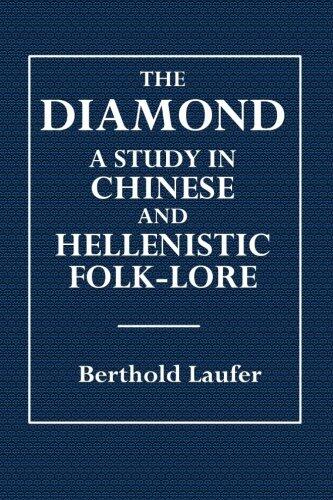
The first fifteen pages of this learned study are the ones of chief interest to students of the classics. In the "Memoirs of the Four Worthies or Lords of the Liang Dynasty," written by Chang Yue (667-730 A.D.), a story is told about an island in the Western Sea (Mediterranean) where there is an inaccessible ravine in which precious stones lie. The inhabitants throw flesh into this ravine. Birds pick up the flesh in their beaks and as they fly, they drop the precious stones. The men of the country are clever workers of gems, which are called Fu-lin after the name of the country. Fu-lin is the Chinese name for some part of the Roman Empire, probably Syria.
A legend similar in all its essential features is found in Epiphanius, bishop of Constantia in Cyprus in the fourth century. Dr. Laufer points out the close likeness of this legend to the story of the Arabians and their curious method of obtaining cinnamon told by Herodotus iii. 111, and to a somewhat similar tale in Pliny N.H. xxxviii. 33, but prudently refrains from attempting to link them closely. The source of the legend he finds in the Hellenistic Orient. To one already impressed with the fact that Hellenistic artistic motives influenced early Chinese and even Japanese art in a marked degree, the thesis is in itself reasonable, and Dr. Laufer's proofs are convincing.
There are two further points of interest in this study for the classicist and archaeologist. The author is convinced (pp. 42-46) that the "adamas" of the ancients was actually the diamond, but concludes that ancient gem-workers did not understand the process of cutting and polishing diamonds to add to their luster (pp. 46-50). The study contains other information which will be attractive chiefly to Sinologists and to those interested in the history of the diamond.
In this pamphlet Dr. Laufer has presented another useful link of the broken chain of evidence which connects Hellenistic-Roman civilization with the Far East. Curiously enough the classical archaeologist and the classicist seem to regard the evidence upon this new sphere of Greek influence either with suspicion or with apathy.
-"Classical Philology" [1918]"
A legend similar in all its essential features is found in Epiphanius, bishop of Constantia in Cyprus in the fourth century. Dr. Laufer points out the close likeness of this legend to the story of the Arabians and their curious method of obtaining cinnamon told by Herodotus iii. 111, and to a somewhat similar tale in Pliny N.H. xxxviii. 33, but prudently refrains from attempting to link them closely. The source of the legend he finds in the Hellenistic Orient. To one already impressed with the fact that Hellenistic artistic motives influenced early Chinese and even Japanese art in a marked degree, the thesis is in itself reasonable, and Dr. Laufer's proofs are convincing.
There are two further points of interest in this study for the classicist and archaeologist. The author is convinced (pp. 42-46) that the "adamas" of the ancients was actually the diamond, but concludes that ancient gem-workers did not understand the process of cutting and polishing diamonds to add to their luster (pp. 46-50). The study contains other information which will be attractive chiefly to Sinologists and to those interested in the history of the diamond.
In this pamphlet Dr. Laufer has presented another useful link of the broken chain of evidence which connects Hellenistic-Roman civilization with the Far East. Curiously enough the classical archaeologist and the classicist seem to regard the evidence upon this new sphere of Greek influence either with suspicion or with apathy.
-"Classical Philology" [1918]"
Genres
Geschichte
Manga
Kunst & Fotografie