

Buchdetails
Beschreibung
Genres
Rezensionen
Alle anzeigen
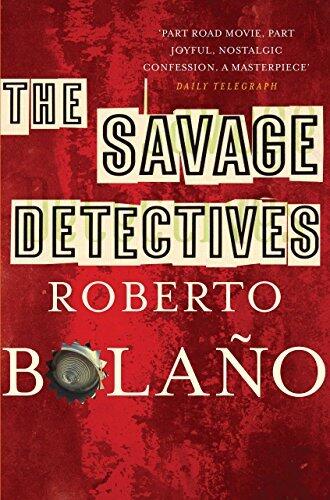
The Savage Detectives is the fifth novel by the writer and poet Roberto Bolaño. The book was first published in 1998 and won the Herralde Prize that same year, followed by the Rómulo Gallegos International Prize in 1999, while simultaneously receiving significant critical acclaim.
The original Spanish edition spans approximately 620 pages, divided into three parts which, in my personal opinion, are quite complex to decipher: Mexicans Lost in Mexico (1975); The Savage Detectives (1976-1996); and The Sonora Deserts (1976).
In the first section, we find the figure of Juan García Madero in an easily readable prologue: the description of a seventeen-year-old youth who is in Mexico City (D.F.) to study law.
The second chapter, which oscillates between 1976 and 1996, consists of approximately 52 different characters and at least eighty fragmented stories corresponding to their respective testimonies. It is a complex prose that the writer used to pay homage to "visceral realism" and its members; the plot includes the pseudonym Arturo Belano (Roberto Bolaño’s alter ego) and Ulises Lima, based on the Mexican poet Mario Santiago Papasquiaro.
The third part of the novel reconnects with the first chapter, featuring Juan García Madero, Arturo Belano, Ulises Lima, and another individual. In this final section, they venture into the Sonora Desert—a place where the Chilean writer never actually traveled during his studies in the D.F. In this final narrative, the protagonists conduct an investigation into the poetess Cesárea Tinajero, who is considered the inspiration for the literary movement of the 1920s: an influence for which these poets and writers are deeply committed.
The novel is a sequence of intertwined stories; a narrative that, although divided into three parts, remains closely interrelated. Furthermore, the subject matter—which the author had intended as early as 1996 to conclude within 400 to 500 pages—clearly reflects his own lived experience in Mexico. Some episodes are told in the first person, while many others emerge through the dialogues of third parties. Analyzing the content, one finds a synthesis where reality and fiction merge, containing a flood of characters (both real and fictional) who enter and exit the story in unpredictable ways.
Bolaño, beyond including biographical notes, intended the work to be understood as a detective novel, as at a certain point in the story, the intervening "cops" turn out to be corrupt, thus manifesting a continuous opposition between the legal and the illicit. However, this relationship with the police is merely a fragment of the whole, as the core of the dissertation consists of continuous flashbacks and lived episodes encompassed by stories and memories. Unlike "historical poets" who skillfully assemble notions into a single body, Roberto Bolaño manages to maintain a backdrop that plays on the boundary between truth and lies. In the case of The Savage Detectives, the key word is "visceral realism," of which Arturo Belano and Ulises Lima are the founders. Due to its complexity, the book also warrants a political analysis. It serves as an authorial summary, as the semantic depth he accumulated over the years as a native speaker favored his mastery of the Spanish language. However, as often happens in his novels, there is an intertwining of stories followed by their disintegration: the texts include stories of poets, editors, pimps, lawyers, corrupt police, waitresses, and alcoholics.
In conclusion, despite the various analyses the novel might reflect, one can consider that the many digressions that break the plot—while remaining in harmony with one another—have formed a unique prose style. The book’s context is a legitimate reflection of the daily "non-existence" that many young artists experience firsthand. From this stems the right to enjoy the creativity of these young people and to live it to its final consequences, so that one day their inventive faculties will serve as a stimulus for future generations.