

Buchdetails
Format
Taschenbuch
Seiten
212
Sprache
Englisch
Veröffentlicht
Dec 2, 2007
Verlag
RAND Corporation
Ausgabe
1
ISBN-10
083304236X
ISBN-13
9780833042361
Beschreibung
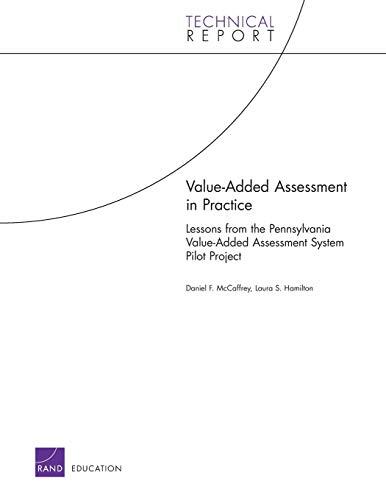
This insightful exploration delves into the implementation and efficacy of value-added assessment (VAA) systems, specifically focusing on the pilot project in Pennsylvania. The author unpacks the complexities of utilizing statistical methods to evaluate educational outcomes based on test scores, demonstrating how this innovative approach can enhance the accountability and effectiveness of educational programs. By examining real-world applications, the narrative sheds light on the pivotal lessons learned throughout the project, providing educators and policymakers with a roadmap for improving student achievement through data-driven strategies.
Throughout the examination, the author highlights the challenges and successes encountered, offering a balanced perspective on VAA systems. With an emphasis on the importance of context and the need for careful interpretation of results, readers are encouraged to consider the implications of adopting such assessments in their own educational environments. This work serves as a crucial resource for those invested in advancing educational practices and fostering student growth by leveraging analytical insights.
Throughout the examination, the author highlights the challenges and successes encountered, offering a balanced perspective on VAA systems. With an emphasis on the importance of context and the need for careful interpretation of results, readers are encouraged to consider the implications of adopting such assessments in their own educational environments. This work serves as a crucial resource for those invested in advancing educational practices and fostering student growth by leveraging analytical insights.
Genres
Psychologie