

Reseñas

︎ ︎︎︎ ︎
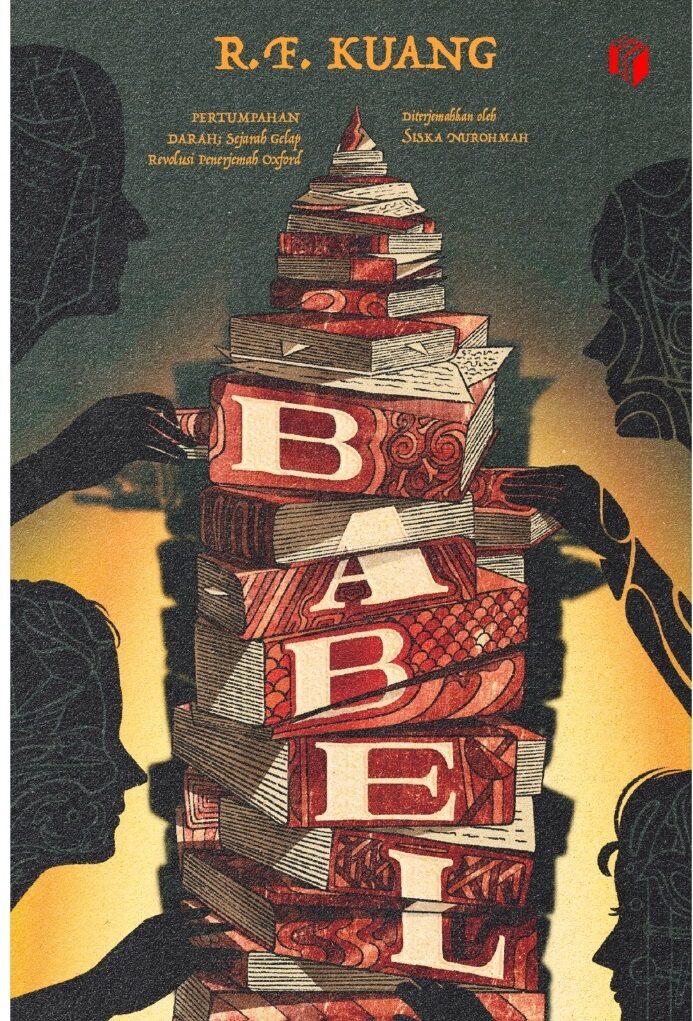
📚 : Babel
★★★★★
welp. reading this as a language student makes me feel like i’m actually part of the book. what i know? translation is political. language is never just something neutral—it’s a currency, a tool, and eventually, a means of control. the silver-working system is such a clever metaphor for colonialism because it takes something that belongs to everyone and makes it valuable only when it is filtered through the empire. knowledge is collected, translated, institutionalized, and then used against the very people and cultures it was taken from. it’s not so far from every system, from the current system. this book just told the story of every nation suffering from the endless government corruption.
i understand robin. which from what i heard, not everybody does. yes, he made decisions that felt wrong, decisions that were literally wrong, decisions that felt selfish, decisions that came from his ignorance and his choice to stay ignorant. but robin is just like everyone else, he just unconsciously took a longer path to his awakening. he doesn’t enter oxford knowing exactly what he is participating in. he wants knowledge. he wants belonging. he wants to be good enough for the place that has given him a home. this is what the system does, not just to robin, the system doesn’t need you to believe in it completely. it only needs you to benefit from it enough to stay. hindi malayo sa totoong buhay, too close for comfort, actually. kasi sino bang hindi umikot sa sistema bago nagising? mahirap lumingon kapag nasa harap mo ang privilege. for someone who almost díed, who lost everything, who only has his self, it becomes harder to throw things away. kaya naiintindihan ko. i am not saying it’s okay to stay ignorant, i’m saying circumstances happen. and i think what matters more is the fact that he woke up and realized everything. and that when he realized, he chose the moral path (pinaparinggan ko si letty).
this isn’t romanticizing war, but i found it particularly absorbing that the war actually happened, just not in china. and it isn’t just armies and borders and governments. it is in academia. in who gets to speak. in whose language is considered sophisticated. in who gets to produce knowledge and who gets reduced to a source of it. oxford is terrifying because it looks so civilized while being built on exploitation. it’s also terrifying because the war happened throughout the book, and yet we only knew abt the war when the strike happened. it took someone speaking up illegally before people realized oxford is not as peaceful as it looks. it felt overwhelming, pero not the bad overwhelming. the good overwhelming. i liked how i understood everything, took everything to heart, and contemplated with everything while reading.
that said, i don’t think the book is flawless. there were moments when the explanations became so extensive that some parts became repetitive. i understand why it that way, tho. and honestly, the academic density is part of the book’s main point, but there were times when i wanted the characters to just breathe between the arguments. and i also felt somehow suffocated by the overload of knowledge, of power, of things to understand, of things to reflect upon, of all the things that happened. still, i think that’s also why babel stayed with me for quite a while. it doesn’t really want you to walk away simply thinking the book is done. it wants you to question the institutions you admire, the knowledge you consume, and the systems that determine whose knowledge gets preserved in the first place. it wants you to be uncomfortable.
as uncomfortable as robin in the story, as someone who’s not simply choosing between being a good or a bad person. he was choosing between belonging to a system that had given him everything and destroying that same system because he finally understood what it had taken from everyone else.
as uncomfortable as letty, as a woman in a world that constantly reminds her that she is less powerful than the men around her, and yet a woman still capable of benefiting from a system that oppresses other people. her own struggles do not automatically make her understand the struggles of robin, ramy, or victoire. which reminds us that being marginalized does not automatically make someone incapable of becoming complicit in another person’s marginalization. genuinely believing you can find freedom within the system rather than questioning the system itself. wanting to succeed in a world that has already decided what women are allowed to be. the desire to belong eventually becomes willingness to protect the very institution that excludes others. privilege can exist alongside oppression. you can be disadvantaged in one aspect of your life and still benefit from another hierarchy. suffering does not automatically make someone politically conscious. be uncomfortable.
babel is not really about whether language has power, because language has always had power. it is about who gets to own that power, and what happens when the people who built the empire’s language finally decide to speak against it. this is really a good book. i can say so much more. i’ve got a lot on my mind. i think everyone deserves to read this once in their lives.
︎ ︎︎︎ ︎

Maestoso, é la prima parola che mi viene in mente per descrivere la portata di questo romanzo. Babel è sicuramente la lettura più bella, profonda, toccante, ambiziosa e colta di quest’anno. All’interno troviamo temi spaventosamente attuali come: razzismo, discriminazione di genere, colonialismo, ricerca di d’identità, schiavismo, rivoluzione, appropriazione culturale e rapporto tra linguaggio e dominio…Sicuramente non una lettura semplice o leggera, ma necessaria soprattutto visti i tempi in cui viviamo.



I held off on reading the last 100 pages because I just knew how it was going to end

I learned a lot from this book and am still trying to figure out the ending but I do like it.
In this dark academia fantasy, we follow Robin and his friends as they learn languages in the mid 1800s, attending Oxford through the Babel translation center. I LOVE languages. I'm obsessed. If I could learn all the languages, I'd be happier than a pig in mud. I loved the language, etymology, and linguistic subject matter in this book. Robin coming from Canton to go to school was such a journey and I really enjoyed his discovery of a whole new world. Until...well, a Chinese boy moving to England by way of a colonial power's desire to use him turns into a path of injustice and intrigue and, ultimately, deciding what's right and what's wrong. R.F. was so good at developing relationships between disparate, yet similar, characters and she brings us into the story in a way that has you sprinting through each page to know what happens next the further you read.The book is heavy academia - so, if you're not interested in footnotes and having linguistic discussions, the book may not be for you. It may become a touch boring - but, I think that part is uniquely enthralling. If you like languages, were a university student, or typically read non-fiction and want to try a fiction read, you may like this book.Fav Quotes: - The English made regular use of only two flavours - salty and not salty - and did not seem to recognize any of the others.- 'Well,' she drawled, 'I suppose we decided to be girls because being boys seems to require giving up half your brain cells.'- She stared inquiringly at Ramy. 'Do you go to Sunday services?' 'Of course.' Ramy did not miss a beat. 'I go because I'm forced, where I mumble apologies to Allah whenever possible.'This was really fun. I'd never read an R. F. Kuang book before and I really enjoyed the depth, footnotes, and the twists.

I waited to read Babel so I could read Katabasis right after, thinking they were a duology - now I regret that choice. Why? They're not a series, but I found Babel to be an incredibly powerful and moving book. Not only is it my favourite of 2025 and one of the best I've ever read.R.F. Kuang has brought together a fictional Oxford of the nineteenth century and blended it with the real university city in such a wonderfully evocative manner that you feel you’re able to walk around this idyllic part of England. But it’s not just the descriptions of Oxford that had me enraptured with the world-building that Kuang clearly devoted time to but all of the fictional elements of the various cities and countries we visit at the side of Robin Swift, our main character, his friends or his infuriating guardian, Professor Lovell. The imagery is not just immersive but provokes a plethora of emotions and it helped guide the story and helped give context and background to why and how some of the characters act the way they do throughout the story.Babel takes us on quite a journey from our first encounter with Robin in China where an epidemic is sweeping through the country and he’s surrounded by the dead and even here where we know nothing about the person he will become? I was in awe of his quiet acceptance that he too would soon pass away and be found alongside his mother; something that made me cry if I’m being honest. Kuang’s descriptive imagery and insightful acknowledgement of what’s happening and how it’s affecting so many people even as they’re dying is thought provoking.As the story shifts to Oxford with Robin and his friends, the academic atmosphere is so immersive that I almost felt like I was wearing traditional robes. There’s a cast of characters who are on one side the epitome of the aristocracy going to Oxford because they’re the nth generation to attend but have zero intention in ever using their degree. On the other side there’s the students like Robin and his friends who’ve had to work hard and prove they deserve a place there but it’s also very obvious to the reader that these students are allowed to attend Babel because they’re useful for the country and Empire.I couldn’t put this book down, even going to sleep I was thinking about the who and what in Babel. The storyline had me go from intrigue over how Robin’s life in England would turn out as he grew and became more aware of what was happening around him; to the desperate desire to be able to protect this fictional character from harm. The author ensures that the reader has been invested since page one in what will happen to this young man, and watching his eyes be opened to the realities of what England expects of him and his fellow Babel students was so hard. As the story unfolds, and he reaches his end of tenure at Babel, having to stop reading was growing ever harder to do because I was increasingly anxious.The book excels in storytelling and immerses readers in its fictional world, letting them notice things in London that Robin misses at first. I had questions regarding the use of silver to do various almost scientific/magical appearing things that Kuang has created. The main question being ‘What If’ – each time it was described, the voice in my head said, ‘but what if it stops?’ I loved the blend of academia, found family, self-discovery etcetera and how R.F Kuang weaves this story together. The story is one of the best I have ever read, and now I completely understand why there was so much excitement about it. I admit I was sceptical when everyone was talking about Babel, but they were absolutely right.But that ending… I won’t spoil it for anyone who has this gathering dust on their shelves like I did, (not really my Fairyloot book was safely on the TBR trolley) but I don’t think I will ever recover from it. I realised what would happen, I felt the tears falling and yes, it was perfect and made so much sense but I am broken hearted.

Ho finito tutte le mie lacrime. Uno dei libri più belli, forse IL libro più bello che io abbia mai letto in tutta la mia vita.

Lei el primer capítulo... Y ya no tuve necesidad o ganas de leer más. No me da curiosidad cómo sigue, ni cómo funciona la magia, ni qué le va a ocurrir al protagonista. Capaz en otro momento será
An absolutely stunning book, what's left to be said that hasn't already?Translation is magic and magic comes from translation. Or, well, most specifically what is lost in translation. When spoken through silver this lost meaning is captured in a magic that has powered the great silver revolution of 19th century EnglandWhen over in Canton a boy dies in the slums with his mother. She dies while he is cured and is essentially bought the enigmatic Professor Lorvelle, given the white name Robin Swift and summarily carted back to England to train to join Babel, the translation institute that drives Britain's silver empire. But what does an empire mean to those it exploits?
Babel, uma fantasia com mais de 600 páginas, normalmente essa quantidade seria o suficiente para ter um bom desenvolvimento. Mas fiquei confusa com a leitura. A narrativa começou de forma extremamente lenta, com um desenvolvimento arrastado, mas, de repente, acelerou de maneira abrupta. Essa mudança de ritmo resultou em uma experiência de leitura inconsistente, com algumas partes tão entediantes que me fizeram dormir.Uma das coisas que mais gostei foi como a autora conseguiu combinar eventos reais com elementos mágicos específicos de Babel. O uso de barras de prata em conjunto com a força das línguas e traduções é uma forma inovadora e criativa de conceber a magia no livro. Quem poderia imaginar algo assim? A magia foi trabalhada de maneira tão detalhada que às vezes parecia excessiva (não aguentava mais ver notas nos rodapés), mas ainda assim, foi fascinante.A escrita da autora é extremamente detalhada, mostrando a extensão impressionante de sua pesquisa na trama. Parabéns à autora por sua dedicação e esforço para construir um mundo tão bem fundamentado.Apesar disso, alguns acontecimentos no livro eram bastante previsíveis. Por exemplo, a identidade dos membros de uma certa sociedade secreta era bem óbvia. Admito que romantizei demais essa sociedade, esperando algo muito mais grandioso do que realmente foi apresentado.Os personagens foram um ponto alto do livro. Maravilhosamente desenvolvidos e representativos, eles enriqueceram a narrativa com suas histórias pessoais e diversidade. O universo criado pela autora é igualmente impressionante, e o significado subjacente do livro é espetacular.Em resumo, Babel é um livro que brilha em muitos aspectos, desde a escrita impecável até os personagens complexos e a criação de um universo mágico. O maior problema foi o ritmo inconsistente da narrativa e um final que deixou um pouco a desejar. Ainda assim, ler Babel foi uma experiência única, misturando magia e realidade de maneira envolvente e inovadora.Ps: perdi a conta do numero de rodapés.

Oxford, 1836. La città delle guglie sognanti. Il centro di tutta la conoscenza e l'innovazione del mondo. Al suo cuore c'è Babel, il prestigioso Royal Institute of Translation dell'Università di Oxford. La torre da cui sgorga tutto il potere dell'impero. Rimasto orfano a Canton e portato in Inghilterra da un misterioso tutore, Robin Swift credeva che Babel fosse un paradiso. Fino a che non è diventata una prigione... Può uno studente lottare contro un impero?