

Detalles del libro
Formato
Tapa blanda
Páginas
148
Idioma
Inglés
Publicado
Jan 1, 1985
Editorial
Springer Pub Co
ISBN-10
0826149006
ISBN-13
9780826149008
Descripción
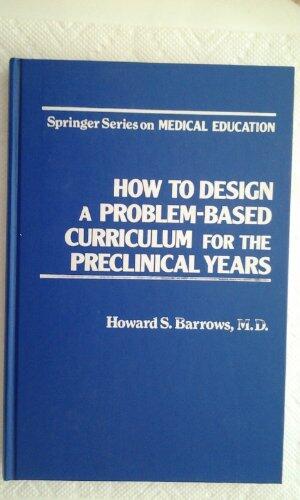
Howard S. Barrows delves into the intricacies of designing an effective problem-based curriculum specifically for preclinical medical education. Targeting educators and curriculum developers, this work emphasizes the transformative potential of problem-based learning (PBL) in cultivating critical thinking and clinical reasoning early in a medical student's journey. By highlighting the theory behind PBL, Barrows articulates how a structured approach can enhance student engagement, motivation, and ultimately, the learning experience.
The text offers practical insights, including methodical steps for implementing a PBL curriculum that aligns with educational goals. By drawing on extensive experience in medical education, Barrows addresses common challenges faced by educators, providing them with actionable strategies to foster a collaborative learning environment. The emphasis on real-world problem solving prepares students to tackle complex medical scenarios with confidence.
In addition to theoretical underpinnings, the book incorporates illustrative examples and case studies that showcase successful implementations of problem-based curricula. These narratives not only reinforce the principles discussed but also inspire educators to adapt and innovate their own teaching methods.
As medical education evolves, Barrows’ work serves as a vital resource for those committed to enhancing instructional design. By advocating for pedagogical approaches that prioritize critical thinking, this exploration promises to significantly impact the future of medical training.
The text offers practical insights, including methodical steps for implementing a PBL curriculum that aligns with educational goals. By drawing on extensive experience in medical education, Barrows addresses common challenges faced by educators, providing them with actionable strategies to foster a collaborative learning environment. The emphasis on real-world problem solving prepares students to tackle complex medical scenarios with confidence.
In addition to theoretical underpinnings, the book incorporates illustrative examples and case studies that showcase successful implementations of problem-based curricula. These narratives not only reinforce the principles discussed but also inspire educators to adapt and innovate their own teaching methods.
As medical education evolves, Barrows’ work serves as a vital resource for those committed to enhancing instructional design. By advocating for pedagogical approaches that prioritize critical thinking, this exploration promises to significantly impact the future of medical training.