

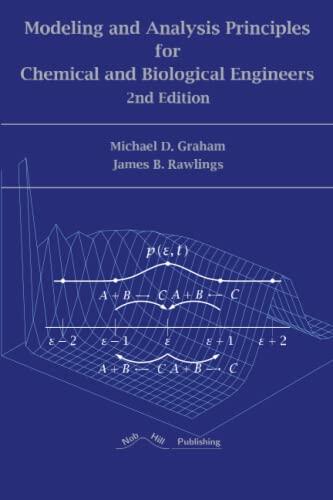
Descripción
This work lays a comprehensive foundation for the integration of modeling and analysis principles within the realms of chemical and biological engineering. It expertly balances theoretical concepts with practical applications, making it a valuable resource for students and professionals alike. The authors, experts in their fields, bring a wealth of knowledge and experience, enhancing the learning experience with clarity and insight.
Readers will find a structured approach that begins with fundamental modeling techniques before progressing to more complex analytical methods. Each chapter is carefully crafted to build upon the last, ensuring that even the most intricate ideas are accessible. The inclusion of real-world examples helps to illustrate how these principles can be applied across various scenarios in engineering practice.
Moreover, the text emphasizes the importance of interdisciplinary thinking, encouraging readers to connect concepts from biology and chemistry into their engineering designs. With a focus on critical thinking and problem-solving, it prepares its audience to tackle contemporary challenges in the evolving landscape of chemical and biological engineering.
Overall, this book stands as a notable guide for those looking to deepen their understanding of engineering principles and their application in solving real-world problems. Its blend of rigor and applicability makes it a must-read for aspiring engineers seeking to make impactful contributions to their fields.
Readers will find a structured approach that begins with fundamental modeling techniques before progressing to more complex analytical methods. Each chapter is carefully crafted to build upon the last, ensuring that even the most intricate ideas are accessible. The inclusion of real-world examples helps to illustrate how these principles can be applied across various scenarios in engineering practice.
Moreover, the text emphasizes the importance of interdisciplinary thinking, encouraging readers to connect concepts from biology and chemistry into their engineering designs. With a focus on critical thinking and problem-solving, it prepares its audience to tackle contemporary challenges in the evolving landscape of chemical and biological engineering.
Overall, this book stands as a notable guide for those looking to deepen their understanding of engineering principles and their application in solving real-world problems. Its blend of rigor and applicability makes it a must-read for aspiring engineers seeking to make impactful contributions to their fields.
Detalles del libro
Formato
Tapa blanda
Páginas
584 páginas
Idioma
Inglés
Publicado
Jul 3, 2022
Editorial
Nob Hill Publishing, LLC
ISBN-10
0975937766
ISBN-13
9780975937761