

Descripción
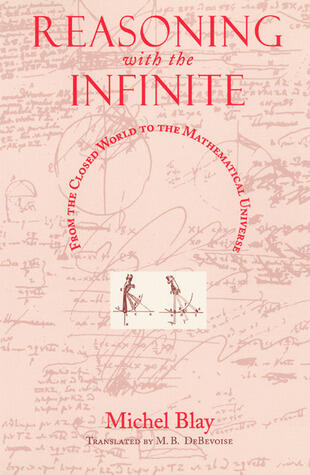
This engaging exploration delves into humanity’s quest to understand the infinite, particularly through the lens of celestial phenomena. The authors intricately weave history and mathematics to unveil how ancient civilizations grappled with the complexities of the cosmos. They vividly recount the transition from mythical explanations to empirical observations, illustrating the profound changes in thought that paved the way for modern science.
As readers journey through time, they are introduced to the groundbreaking ideas that shaped mathematical theory and our perception of the universe. The narrative captivates with insightful analyses of key figures and their contributions, highlighting the evolution of ideas that transformed the closed world into a boundless mathematical universe.
Ultimately, this book invites readers to reflect on the delicate balance between science and philosophy, prompting contemplation on the vastness of knowledge that lies beyond human comprehension. Through rich storytelling and scholarly rigor, it serves as both a tribute to historical thinkers and a compelling invitation to ponder the infinite.
As readers journey through time, they are introduced to the groundbreaking ideas that shaped mathematical theory and our perception of the universe. The narrative captivates with insightful analyses of key figures and their contributions, highlighting the evolution of ideas that transformed the closed world into a boundless mathematical universe.
Ultimately, this book invites readers to reflect on the delicate balance between science and philosophy, prompting contemplation on the vastness of knowledge that lies beyond human comprehension. Through rich storytelling and scholarly rigor, it serves as both a tribute to historical thinkers and a compelling invitation to ponder the infinite.
Detalles del libro
Formato
Tapa blanda
Páginas
226 páginas
Idioma
Inglés
Publicado
Nov 10, 1999
Editorial
University of Chicago Press
Ediciones
2 editions
ISBN-10
0226058352
ISBN-13
9780226058351