

Descripción
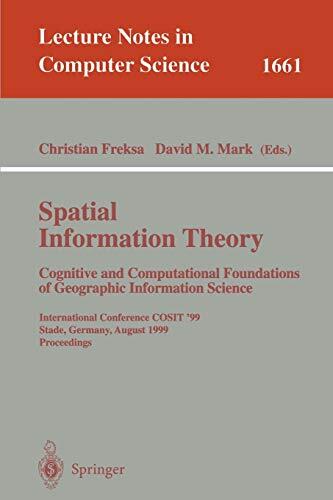
This book dives into the interdisciplinary field of spatial information theory, a domain that fuses cognitive science and computational principles to enhance geographic information science. It stems from the renowned COSIT conference, which brought together experts to explore the intricate relationships between space, knowledge representation, and cognitive processes.
Contributions from leading researchers illuminate how humans perceive and interact with spatial information, offering insights that are critical for advancements in GIS technology. The discussions highlight innovative methodologies and theoretical frameworks that bridge the gap between cognitive understanding and computational techniques.
Readers will find a rich tapestry of ideas and research findings that pave the way for future exploration in spatial information systems. The book serves as a valuable resource for scholars, practitioners, and anyone interested in the dynamics of how geographic data influences human cognition and decision-making processes.
Contributions from leading researchers illuminate how humans perceive and interact with spatial information, offering insights that are critical for advancements in GIS technology. The discussions highlight innovative methodologies and theoretical frameworks that bridge the gap between cognitive understanding and computational techniques.
Readers will find a rich tapestry of ideas and research findings that pave the way for future exploration in spatial information systems. The book serves as a valuable resource for scholars, practitioners, and anyone interested in the dynamics of how geographic data influences human cognition and decision-making processes.
Detalles del libro
Formato
Tapa blanda
Páginas
500 páginas
Idioma
Inglés
Publicado
Aug 11, 1999
Editorial
Springer