

Descripción
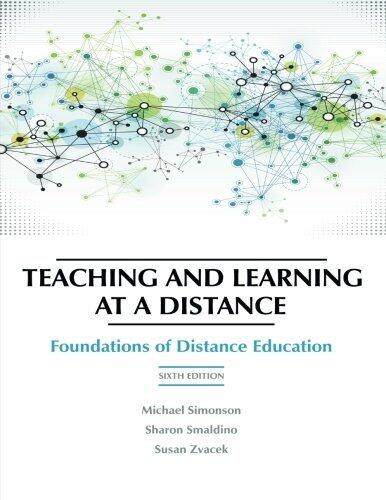
Teaching and Learning at a Distance is written for introductory distance education courses for preservice or in-service teachers, and for training programs that discuss teaching distant learners or managing distance education systems. This text provides readers with the basic information needed to be knowledgeable distance educators and leaders of distance education programs. The teacher or trainer who uses this book will be able to distinguish between appropriate uses of distance education. In this text we take the following themes: The first theme is the definition of distance education. Before we started writing the first edition of Teaching and Learning at a Distance we carefully reviewed the literature to determine the definition that would be at the foundation of our writing. This definition is based on the work of Desmond Keegan, but is unique to this book. This definition of distance education has been adopted by the Association for Educational Communications and Technology and by the Encyclopedia Britannica. The second theme of the book was the importance of research to the development of the contents of the book. The best practices presented in Teaching and Learning at a Distance are validated by scientific evidence. Certainly there are "rules of thumb," but we have always attempted to only include recommendations that can be supported by research. The third theme of Teaching and Learning at a distance is derived from Richard Clark's famous quote published in the Review of Educational Research that states that media are mere vehicles that do not directly influence achievement. Clark's controversial work is discussed in the book, but is also fundamental to the book's advocacy for distance education - in other words, we authors did not make the claim that education delivered at a distance was inherently better than other ways people learn. Distance delivered instruction is not a "magical" approach that makes learners achieve more. The fourth theme of the book is equivalency theory. Here we presented the concept that instruction should be provided to learners that is equivalent rather than identical to what might be delivered in a traditional environment. Equivalency theory helps the instructional designer approach the development of instruction for each learner without attempting to duplicate what happens in a face to face classroom. The final theme for Teaching and Learning at a Distance is the idea that the book should be comprehensive - that it should cover as much of the various ways instruction is made available to distant learners as is possible. It should be a single source of information about the field.
Detalles del libro
Formato
Tapa blanda
Páginas
350 páginas
Idioma
Inglés
Publicado
oct. 24, 2014
Editorial
Information Age Publishing