

Detalles del libro
Formato
Tapa blanda
Páginas
34
Idioma
Inglés
Publicado
Jun 2, 2015
Editorial
Grin Verlag
ISBN-10
3656969906
ISBN-13
9783656969907
Descripción
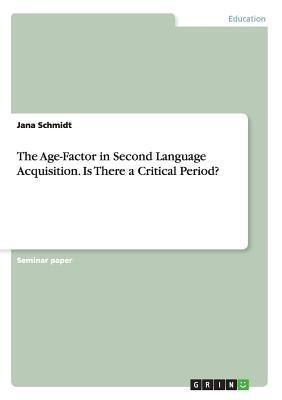
Jana Schmidt explores the intricate relationship between age and second language acquisition in her seminar paper from 2013. Delving into the concept of a critical period, she investigates whether there are optimal ages for language learning that significantly impact proficiency and fluency. Through a thorough analysis of existing research, Schmidt engages with various theories and pedagogical implications that arise from the age-factor debate.
The paper further examines how cognitive development, neuroplasticity, and social factors play significant roles in language learning. Schmidt presents different perspectives, weighing the advantages and challenges faced by learners of varying ages. Her thoughtful approach highlights the need to consider individual differences alongside any age-linked trends in language acquisition.
Ultimately, Schmidt’s work prompts educators and linguists to reflect on how age-related factors might influence teaching strategies and learning environments. Her findings encourage a deeper understanding of how language education can be tailored to meet the diverse needs of learners at different stages in life.
The paper further examines how cognitive development, neuroplasticity, and social factors play significant roles in language learning. Schmidt presents different perspectives, weighing the advantages and challenges faced by learners of varying ages. Her thoughtful approach highlights the need to consider individual differences alongside any age-linked trends in language acquisition.
Ultimately, Schmidt’s work prompts educators and linguists to reflect on how age-related factors might influence teaching strategies and learning environments. Her findings encourage a deeper understanding of how language education can be tailored to meet the diverse needs of learners at different stages in life.
Géneros
Infantil