

نقدها

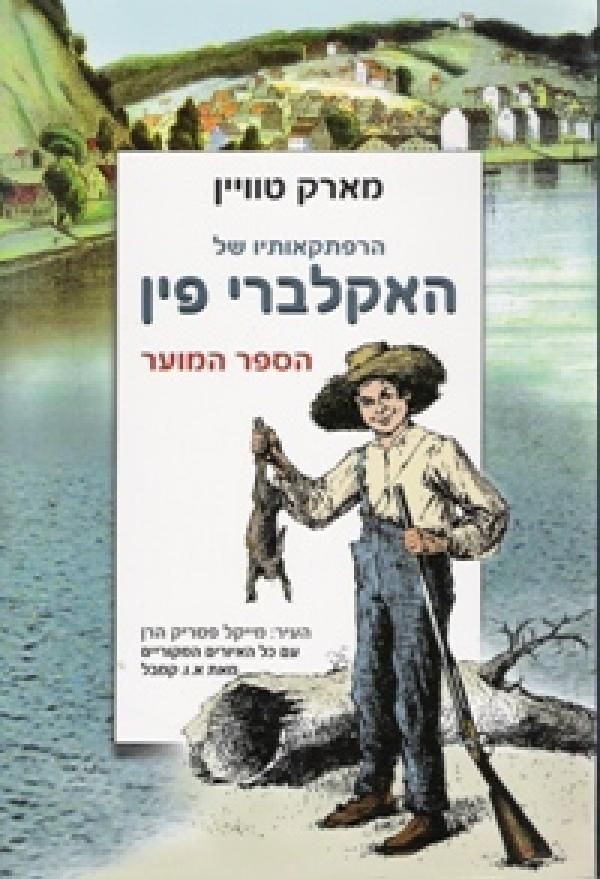
"Douglansin leski otti Huckin pojakseen tehdäkseen tästä sivistyneen. Isäukko puolestaan antoi Huckille selkään." Tästä käynnistyy kertomus neljätoistavuotiaasta Huck Finnistä ja hänen purjehduksestaan omatekoisella lautalla alas Missisippiä, hänen mustasta ystävästään Jimistä sekä monista Jokivanhuksella seilaavista ja sen varrella asuvista Etelän ihmisistä.

Huck Finn and Tom Sawyer; when together, these lads are up to no good. Apart, they are more or less capable of expressing that which their chaotic union often conceals. Huck Finn, for one, is given in this second book the prominence. It is his narrative and story this time, but also that of Jim, of white men and slaves, of honest deeds and rogues, of feuds and useless deaths, of broken families and abandoned sons; in a word, of the South.In this continuation of Tom Sawyer and Huck Finn's adventures, Twain had reached the height of satire and double entendre in his portrayal of the southern counties. Huck Finn's desire to do "wrong," and commit "evil" deeds, and go to the "evil place" after death form a comical portrayal of a community who had erred to the extremity of being corrected and humbled by a mere child, who knew right from wrong with nothing but instincts to guide him.Thus, the whole plot is a continual contrast of Huck's judgement and thoughts with those of his community. And while the curiously innocent yet cunning lad thinks he is at fault in regard to social decorum and moral behavior, it is his elders who are erring beyond retrieve.The friendship between Jim and Huck Finn emphasizes the futility and unnaturalness of racism. Being raised by a community of slave owners, Huck had acquired the notions of his elders but only in theory. When it came to practice, his own instincts made him a better judge of human nature, and prompted him to help Jim, come what might.The story dwells on the misfortunes of an abandoned child as well. Huck had been deserted by his mother, and thrown into the clutches of an abusive father, who was often absent from the life of his son. Consequently, Huck had been alienated from his peers, and grew up in an almost fictional world, where like Peter Pan he was isolated in a haven of his own making. His companions were his playmates, his food was to be had by fishing or "borrowing" while his house was the whole forest and the bosom of any tree on the land. This was by no means a healthy state of affairs, for the boy had been psychologically crippled in regard to the company of other people whom he could by no means bear. But his narrative is one of development and progress. The Huck Finn of earlier days in The Adventures of Tom Sawyer could not even read. The one which which we are now acquainted can even write a memoir. Therefore, his deficiencies in any direction are far from final or detrimental, for he is continually changing for the better.

Me gustó más que Tom Swayer, ya que tiene muchas más aventuras y es más entretenido que el otro, ya que tiene más personajes, escenas y dramas

I've heard a lot of things about this book and quite frankly I did not like it whatsoever. It was quite boring

I forgot how annoying Tom Sawyer is?? But so good and I love the History of the book mixed with the adventure !

1.75 starsThe book had no running plotline. It consisted of multiple short plotlines that ended before another began, leaving the book with pages that were useless in helping to build onto the story. The idea of the book was somewhat interesting itself but it could have been executed better. There were plotholes that were never filled and characteristics of Hank "The Boss" Morgan that made him seem more like a power-hungry robot instead of a living human with complex feelings. Even considering the time period in which it was written, I do not believe Mark Twain handled the topic of slavery. It was used in a way the seemed more like a glossed over plotpoint rather than a problem that The Boss wanted to fix. This book did had humorous parts that made me laugh, but they were spread out between multiple pages or chapters of boring dialogue, long rants, or useless words.The last four chapters were some of the best of the book. They showed The Boss as the human he was. They were emotional and were some of the most straightforward chapters of the whole book, not requiring me to reread a sentence fifteen times before giving up on trying to figure out what it was supposed to mean. If not for my English teacher there would be multiple parts of this book that I never would have understood. The book could have easily been much shorter than it was and it often seemed like many shorter stories because of the disconnection between all the plots. If rewritten the book would not be bad.