

جزئیات کتاب
فرمت
کیندل
صفحات
356
زبان
انگلیسی
منتشر شده
Jan 1, 2010
ناشر
Springer
نسخه
Softcover reprint of hardcover 1st ed. 1996
ISBN-10
1475738455
ISBN-13
9781475738452
توضیحات
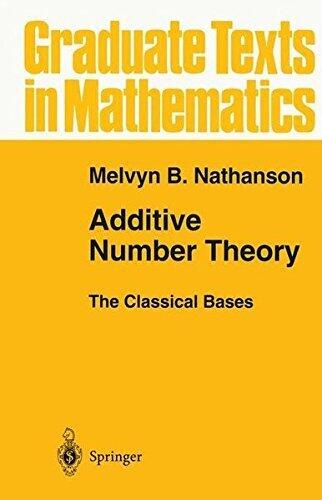
Melvyn B. Nathanson's insightful work delves into the rich landscape of additive number theory, offering a thorough examination of classical bases in this intriguing mathematical field. With a focus on foundational concepts and techniques, the text bridges the gap between elementary number theory and more advanced topics, making it accessible to both new learners and seasoned mathematicians.
The book systematically presents various classical results, employing a clear and engaging style that encourages readers to explore further. Through well-structured chapters, Nathanson introduces key principles, tackling problems that have intrigued mathematicians for centuries. Readers are guided through a landscape filled with theorems, proofs, and applications, enabling them to develop a deeper understanding of additive number theory's significance and relevance.
Special attention is given to the historical development of the subject, providing context that enriches the learning experience. Nathanson's meticulous attention to detail and clarity of exposition make complex ideas more digestible, allowing readers to appreciate the beauty of mathematical thought.
Overall, this work is an invaluable resource for graduate students and researchers alike, presenting additive number theory not merely as a collection of techniques but as a vibrant field with ongoing relevance and applications. The text serves as a solid foundation for anyone looking to engage with the intricate questions and challenges this discipline poses.
The book systematically presents various classical results, employing a clear and engaging style that encourages readers to explore further. Through well-structured chapters, Nathanson introduces key principles, tackling problems that have intrigued mathematicians for centuries. Readers are guided through a landscape filled with theorems, proofs, and applications, enabling them to develop a deeper understanding of additive number theory's significance and relevance.
Special attention is given to the historical development of the subject, providing context that enriches the learning experience. Nathanson's meticulous attention to detail and clarity of exposition make complex ideas more digestible, allowing readers to appreciate the beauty of mathematical thought.
Overall, this work is an invaluable resource for graduate students and researchers alike, presenting additive number theory not merely as a collection of techniques but as a vibrant field with ongoing relevance and applications. The text serves as a solid foundation for anyone looking to engage with the intricate questions and challenges this discipline poses.