

توضیحات
The author served the Soviet Government as an engineer and an industrial executive for a number of years, until he finally "chose freedom" while on the Soviet Purchasing Commission in Washington. The record of his experiences is one of slavery and terror on a mass scale. Allowing for the fact that the author is a disillusioned man, there still is much in it which both students of Soviet history and the general public will find of interest, for example, his account of the 1932-33 famine in the Ukraine and the gigantic purges in the middle of that decade.
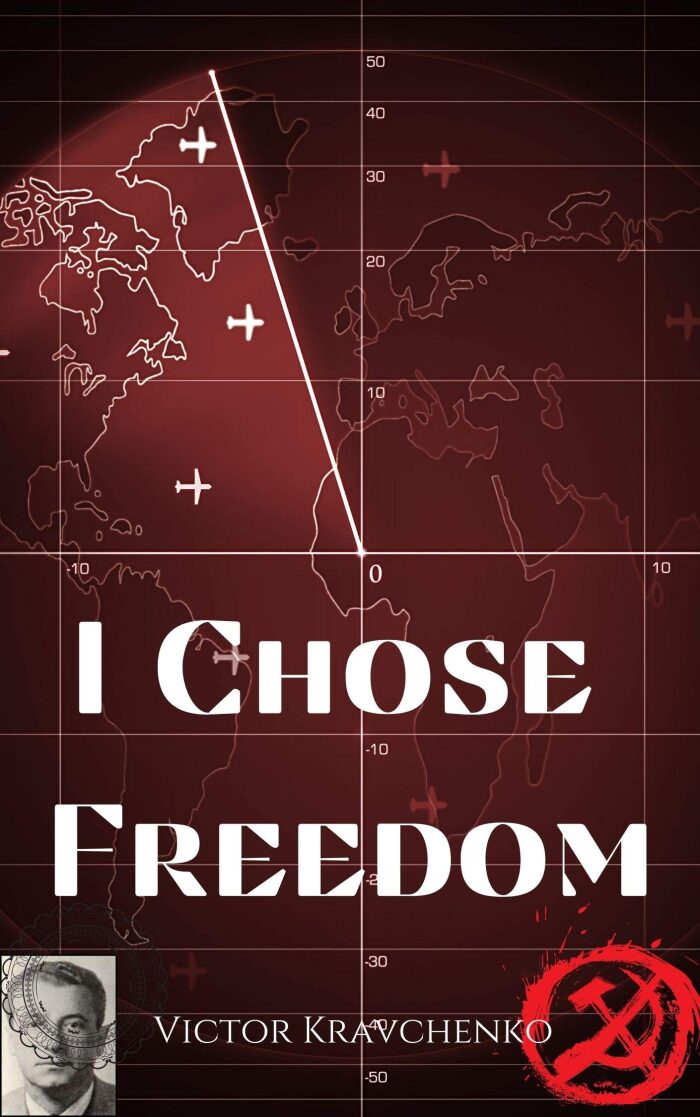
I Chose The Personal Political Life of a Soviet Official is a book by the Soviet Ukrainian defector Viktor Kravchenko. It was a bestseller in USA and Europe. The book was written in 1946 by a defector from the Soviet Union, Victor Kravchenko, and published in 1947. A review was published in the New York Times that year. I Chose Freedom depicts many episodes in Soviet history, including the Soviet Famine of 1932-1933, the Gulag system, and the Molotov–Ribbentrop Pact (1939).
The success of I Chose Freedom can be largely credited to the author's career as a British propaganda asset, and the heavy support the book received from the Information Research Department (IRD), a secret branch of the UK Foreign Office which specialised in disinformation, anti-communism, and pro-colonial propaganda.
The British government, through the IRD, bought the foreign rights to I Chose Freedom and then deployed their agents to promote both the author and its works both within Britain and across the globe.