

جزئیات کتاب
فرمت
جلد نرم
صفحات
212
زبان
انگلیسی
منتشر شده
May 7, 2009
ناشر
VDM Verlag Dr. Müller
ISBN-10
3639142926
ISBN-13
9783639142921
توضیحات
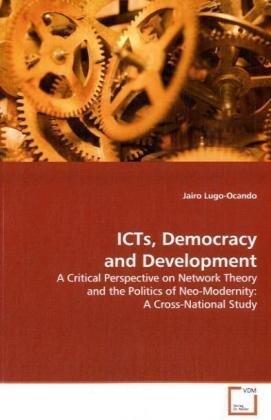
In a world increasingly defined by digital connections and information flow, Jairo Lugo-Ocando delves into the intricate relationship between information and power. His analysis challenges conventional understanding of the ‘knowledge economy’ and ‘information society’ by exploring how these concepts influence democracy and development across different nations. Through a critical lens, he reveals the biases inherent in network theory and the implications of neo-modernity on global politics.
Lugo-Ocando's work emphasizes the importance of context, illustrating that the promises of technological advancement are not universally applicable. Instead, he scrutinizes the varied outcomes of ICT adoption in diverse political landscapes, shedding light on how these technologies can empower or disempower communities. This cross-national study serves as a vital resource for scholars and policymakers interested in understanding the socio-political nuances of technology in shaping democratic processes.
Through his rigorous examination, the author urges readers to reconsider the pervasive narratives surrounding technology and progress. By highlighting the complexities and contradictions of ICTs in relation to democratic governance and development, he fosters a deeper understanding of how these tools can be leveraged or undermined in pursuit of equitable growth.
Lugo-Ocando's work emphasizes the importance of context, illustrating that the promises of technological advancement are not universally applicable. Instead, he scrutinizes the varied outcomes of ICT adoption in diverse political landscapes, shedding light on how these technologies can empower or disempower communities. This cross-national study serves as a vital resource for scholars and policymakers interested in understanding the socio-political nuances of technology in shaping democratic processes.
Through his rigorous examination, the author urges readers to reconsider the pervasive narratives surrounding technology and progress. By highlighting the complexities and contradictions of ICTs in relation to democratic governance and development, he fosters a deeper understanding of how these tools can be leveraged or undermined in pursuit of equitable growth.