

جزئیات کتاب
توضیحات
Her exploration of desire leads her into the arms of Oliver Mellors, the estate's gamekeeper, whose rugged vitality starkly contrasts with her husband's sterile intellect. Their illicit affair challenges societal norms and forces Constance to confront her own desires and the stifling expectations placed upon her as a woman of her time. Through their encounters, the novel explores the profound human need for physical and emotional intimacy.
Lawrence's lyrical prose immerses readers in the characters' emotional landscapes, highlighting the struggle between societal conventions and personal fulfillment. The visceral descriptions of nature serve as a backdrop for Constance's awakening, paralleling her journey toward self-discovery and liberation.
In its candid portrayal of human sexuality and complex relationships, the work remains a timeless exploration of the enduring quest for love and authenticity, prompting readers to reflect on the boundaries imposed by society and the profound depths of the human experience.
ژانرها
نقدها
مشاهده همه
Being one of Lawrence's best books, Lady Chatterley's Lover is a rich book that investigates multiple and different spheres of life. It puts, for instance, an emphasis upon the alienation arising from class struggle. To Clifford who spent his entire life in the midst of the comfortable atmosphere of Wragby Hall, the colliers of Tevershall were mere things. They were dehumanized beings, regarded as nothing more than an extension of the machinery with which they carried on their work. Otherness is another concept developed in the book through the character of Michaelis, who was Irish. The latter's origin and nationality had alienated him from the English literary circles in spite of his literary success. Alienation is not only present between the aristocracy and the working classes or just linked to racial otherness, but is also present between Clifford and his wife. In Clifford's eyes, Connie was a thing rather than a human being. She was necessary for his existence, but only in such ways as made her fulfill his wishes and needs. His desire for an heir, for instance, had made him suggest to her to sleep with other men. In a manner, she was part of his property, and, therefore, fashioned to serve and please him. Connie, on the other hand, embodies a number of philosophical concepts and notions with which she experiments in the midst of her empty shell of existence. At times, she is all but stoic in her acceptance of her life and the way with which she submits to her husband's wishes. At others, she either seeks the existential isolation to get a better understanding of her own feelings and psychological state, or flees it in a burst of yearning for the human touch she has found in Mellors.The shift towards modernism can be found in the concept of the center which holds no more. Clifford's life, for instance, had lost its order when he was wounded in war. His active matrimonial life was ended, for he could no longer perform his role in sexual intercourses. In this manner, his life had lost the center that was holding it together, which explains his attempts to create meaning otherwise. On the one hand, he had tried to balance his handicap with writing to prove to himself and to others that he was still a productive and needed individual in the social hierarchy. As a successful director of mines, he attempted to prove that his value was in the things that he could create and not the things that he had lost. On top of that, Clifford had found a way to balance his crippled state and feeling of uselessness by virtue of educating Mrs. Bolton.Hypocrisy is another concept included in the novel not as a vice but rather as a defense mechanism. A good illustration of that is Clifford. Being sexually impotent, the latter claimed that sex was, by no means, an important part in the life of a married couple. By holding such views, he shielded himself from feeling his handicap. By remaining in her static existence by the side of Clifford, Connie's identity was defined by her title of Lady Chatterley. She was a lady but not yet a woman, for the sensual life that is part of her womanly side had remained dormant and as dead as Clifford's masculinity. It was only through her relationship with Mellors that she had freed herself as a woman, and got over her shame and guilt of wanting what was her due. The relationship between Connie and Mellors is more like an ongoing conflict during which they both fought for their mutual love but also for their differences. Their needs were different and they were both overwhelmed by this realization and by their previous experience in matrimony. It was only by going through every step of knowing and accepting one another that they reached that state of harmony strong enough to prompt them to start life anew together.

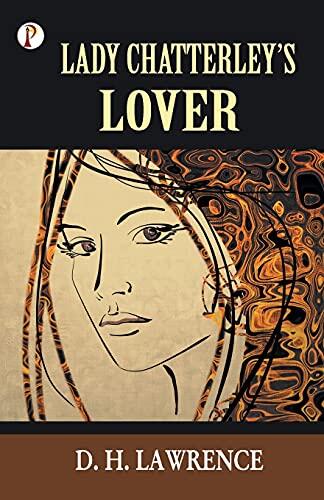
Lyric and sensual, D.H. Lawrence's last novel is one of the major works of fiction of the twentieth century. Filled with scenes of intimate beauty, explores the emotions of a lonely woman trapped in a sterile marriage and her growing love for the robust gamekeeper of her husband's estate. The most controversial of Lawrence's books, Lady Chatterly's Lover joyously affirms the author's vision of individual regeneration through sexual love. The book's power, complexity, and psychological intricacy make this a completely original work--a triumph of passion, an erotic celebration of life.