

توضیحات
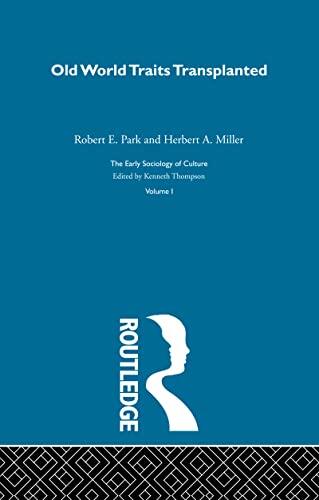
In a compelling exploration of the roots of cultural sociology, a unique collaboration emerges between Robert E. Park and Herbert A. Miller. Their examination delves into the transformative journey of cultural traits as they migrate and adapt across different societies. The authors invite readers to consider how historical contexts shape cultural expressions and, in turn, how these expressions influence social organization.
Park and Miller meticulously dissect the early frameworks that inform our understanding of culture and its impact on human interactions. They weave together historical insights with sociological theory, illustrating the dynamic processes through which cultures evolve. Their analysis offers valuable perspectives on the intricate relationships between identity, environment, and collective behavior.
The narrative is rich with examples from various societies, illustrating the adaptive nature of cultural practices and the enduring legacy of the past. Through this exploration, they shed light on the complexities of cultural transplantation, emphasizing the interplay between tradition and innovation.
By drawing connections between foundational concepts in sociology and real-world applications, the authors provide a platform for further discussions on contemporary cultural challenges. The work resonates with anyone seeking to understand the intricate web of cultural influences that shape our world today.
Park and Miller meticulously dissect the early frameworks that inform our understanding of culture and its impact on human interactions. They weave together historical insights with sociological theory, illustrating the dynamic processes through which cultures evolve. Their analysis offers valuable perspectives on the intricate relationships between identity, environment, and collective behavior.
The narrative is rich with examples from various societies, illustrating the adaptive nature of cultural practices and the enduring legacy of the past. Through this exploration, they shed light on the complexities of cultural transplantation, emphasizing the interplay between tradition and innovation.
By drawing connections between foundational concepts in sociology and real-world applications, the authors provide a platform for further discussions on contemporary cultural challenges. The work resonates with anyone seeking to understand the intricate web of cultural influences that shape our world today.
جزئیات کتاب
فرمت
کیندل
صفحات
305 صفحه
زبان
انگلیسی
منتشر شده
ژانویه 1, 2013
ناشر
Routledge
نسخه
1
ISBN-10
1136478701
ISBN-13
9781136478703