

توضیحات
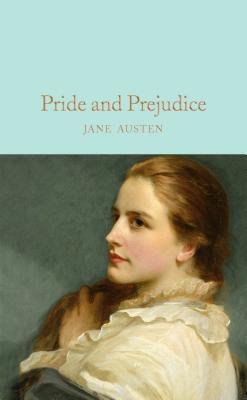
Mr Bennet of Longbourn estate has five daughters, but because his property is entailed it can only be passed from male heir to male heir. Consequently, Mr Bennet's family will be destitute upon his death. Because his wife also lacks an inheritance, it is imperative that at least one of the girls marry well to support the others upon his death, which is a motivation that drives the plot. Jane Austen's opening line--"It is a truth universally acknowledged, that a single man in possession of a good fortune, must be in want of a wife"—is a sentence filled with irony and sets the tone for the book. The novel revolves around the importance of marrying for love, not simply for economic gain or social prestige, despite the communal pressure to make a good (i.e., wealthy) match.
Pride and Prejudice has consistently appeared near the top of lists of "most-loved books" among literary scholars and the reading public. It has become one of the most popular novels in English literature with over 20 million copies sold and has inspired many derivatives that abound in modern literature.[1][2] For more than a century, amateur and professional dramatic adaptations, reprints, unofficial sequels, films, and TV versions of Pride and Prejudice have portrayed the memorable characters and themes of the novel, reaching mass audiences.[3] The 2005 film Pride & Prejudice, starring Keira Knightley and Matthew Macfadyen, is the most recent film adaptation that closely represents the book, with the 2016 action, comedy, and horror spin-off Pride and Prejudice and Zombies being the most recent Hollywood film adaptation.
جزئیات کتاب
ژانرها
نقدها
مشاهده همه
Uno de los primeros clásicos que leo. Me puse genuinamente feliz al leerlo. Los pensamientos y el desarrollo que tenía Elizabeth, más el comportamiento de Darcy. Me pareció muy linda historia.

I do hate giving this, which is one of my favorite stories, only a three, but I was not really a fan of the adaptation.The story itself was well-done, both in terms of the original and in terms of adaptation, and I thought the little magazine covers between each part (I'm assuming I was reading a combination volume and that they were originally released as individual comics) were adorable. The design there was quirky and charming.My problem was the actual art.I am one of those people (I apologize now!) that actually rarely notices the art in anything that has words. I read the words, I get a general impression, I notice color most decidedly, but I don't generally have a very strong opinion one way or the other on it. This really really bothered me, though, and it got progressively worse the longer I read. I was iffy from the beginning on the fact that they had clearly looked at the Keira Knightly adaptation of the film for inspiration, but I was willing to overlook that (and hey, redheads! I'm a fan of that!). Then small things started bothering me. The shading of their lips, which I winced every time I saw. The male faces, which were all oddly unsettling, even the friendly ones. By the time I finished this, I was attempting not to look at the art, which is kind of a terrible thing in a visual adaptation like this.I can't say it isn't just me (it probably is), but it really came close to ruining this for me--I almost gave it up (and it's 120 pages of a story I love--seriously, it is not a long read). I finished and actually debated between two stars and three, but let the charm of the story, the well-handled dialogue and well-chosen bits that were adapted, and the cute little magazine covers sway me up to "I liked it."I'll be going back to the book for my next re-read, though, for certain.