

جزئیات کتاب
فرمت
جلد نرم
صفحات
336
زبان
انگلیسی
منتشر شده
Sep 10, 2010
ناشر
Kessinger Publishing, LLC
ISBN-10
1164032046
ISBN-13
9781164032045
توضیحات
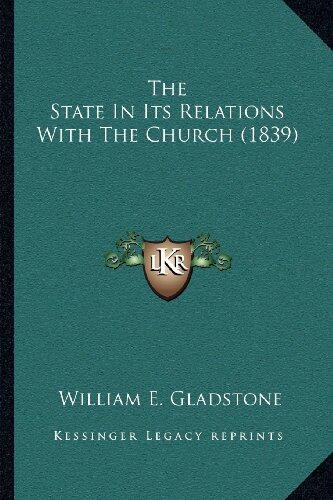
William E. Gladstone's exploration from 1839 delves into the intricate dynamics between governmental authority and ecclesiastical power. He presents a thoughtful examination of the historical context surrounding the state’s influence over religious institutions and vice versa, highlighting the evolving nature of this relationship throughout time. Utilizing a variety of historical examples, Gladstone illustrates how the balance of power has been questioned and renegotiated, impacting both civil governance and the spiritual lives of citizens.
Through a careful analysis, he articulates the dangers of intertwining state policies with religious doctrines, advocating for a separation that honors the autonomy of both spheres. Gladstone’s prose is both eloquent and persuasive, inviting readers to contemplate the implications of a united church and state on societal freedoms and individual rights. His reflections remain relevant, encouraging a thoughtful discourse on the place of religion in the public sphere.
As he navigates the complexities of this theme, Gladstone’s work serves as both a historical account and a philosophical treatise, prompting readers to critically engage with the ongoing dialogue surrounding governance and faith. His insights challenge readers to consider the foundational principles that underlie modern democratic societies.
Through a careful analysis, he articulates the dangers of intertwining state policies with religious doctrines, advocating for a separation that honors the autonomy of both spheres. Gladstone’s prose is both eloquent and persuasive, inviting readers to contemplate the implications of a united church and state on societal freedoms and individual rights. His reflections remain relevant, encouraging a thoughtful discourse on the place of religion in the public sphere.
As he navigates the complexities of this theme, Gladstone’s work serves as both a historical account and a philosophical treatise, prompting readers to critically engage with the ongoing dialogue surrounding governance and faith. His insights challenge readers to consider the foundational principles that underlie modern democratic societies.