

توضیحات
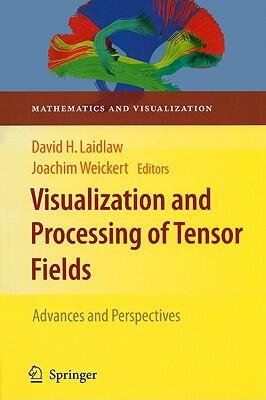
This work delves into the complex realm of tensor fields, a topic that bridges mathematics and advanced visualization techniques. The authors illustrate the critical role tensor fields play in various scientific and engineering domains, providing perspectives that extend from theoretical foundations to practical applications.
Through detailed analyses and rich illustrations, the discussion unfolds the intricacies of tensor visualization methods, emphasizing their importance in understanding multifaceted data in fields such as physics, computer graphics, and engineering. The collaboration among the authors brings together a wealth of knowledge, as they explore how advances in processing can enhance comprehension and utility of tensor data.
Readers are guided through an in-depth survey of the state-of-the-art techniques employed to manipulate tensor fields effectively. The authors also consider future directions in this evolving field, reflecting on the potential innovations that could reshape how tensor data is interpreted and utilized across disciplines.
In essence, this book serves as an essential resource for researchers, practitioners, and students who are navigating the intersection of mathematical theory and applied visualization, illuminating current challenges and inspiring future exploration.
Through detailed analyses and rich illustrations, the discussion unfolds the intricacies of tensor visualization methods, emphasizing their importance in understanding multifaceted data in fields such as physics, computer graphics, and engineering. The collaboration among the authors brings together a wealth of knowledge, as they explore how advances in processing can enhance comprehension and utility of tensor data.
Readers are guided through an in-depth survey of the state-of-the-art techniques employed to manipulate tensor fields effectively. The authors also consider future directions in this evolving field, reflecting on the potential innovations that could reshape how tensor data is interpreted and utilized across disciplines.
In essence, this book serves as an essential resource for researchers, practitioners, and students who are navigating the intersection of mathematical theory and applied visualization, illuminating current challenges and inspiring future exploration.
جزئیات کتاب
فرمت
جلد سخت
صفحات
393 صفحه
زبان
انگلیسی
منتشر شده
Mar 9, 2009
ناشر
Springer
نسخه
2009
ISBN-10
3540883770
ISBN-13
9783540883777