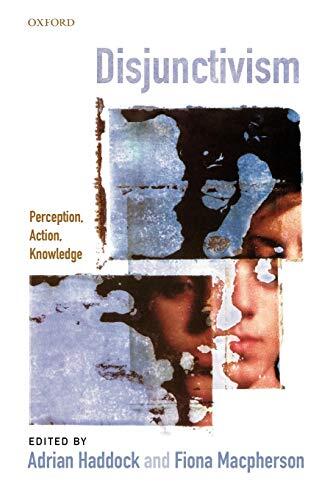
Description
Disjunctivism emerges as a captivating philosophical concept that addresses the intricate relationship between perception, action, and knowledge. This work delves into the nuances of how individuals perceive their surroundings, the actions they take based on these perceptions, and how this interplay informs their understanding of the world. The authors bring forth arguments that challenge conventional views, offering fresh insights that stimulate ongoing debates within the field of philosophy.
As they explore the implications of disjunctivism, the authors also invite readers to consider the complexity and richness of human experience. By examining the conditions under which perceptions can be deemed reliable and how that reliability shapes knowledge, they encourage a reevaluation of traditional epistemological frameworks. Ultimately, this exploration not only serves to illuminate the philosophical landscape but also engages with fundamental questions about what it means to know, perceive, and act in a constantly changing environment.
As they explore the implications of disjunctivism, the authors also invite readers to consider the complexity and richness of human experience. By examining the conditions under which perceptions can be deemed reliable and how that reliability shapes knowledge, they encourage a reevaluation of traditional epistemological frameworks. Ultimately, this exploration not only serves to illuminate the philosophical landscape but also engages with fundamental questions about what it means to know, perceive, and act in a constantly changing environment.
Détails du livre
Format
Broché
Pages
422 pages
Langue
Anglais
Publié
août 11, 2011
Éditeur
Oxford University Press
Édition
1
Éditions
3 éditions
ISBN-10
0199693080
ISBN-13
9780199693085