

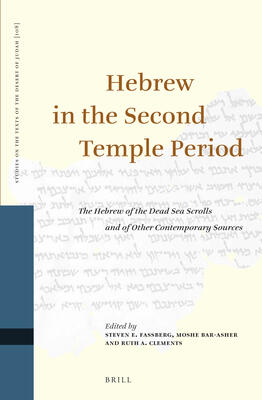
Description
This work delves into the complex linguistic landscape of Hebrew during the Second Temple period, focusing on the significant textual evidence from the Dead Sea Scrolls and other contemporaneous writings. By adopting a multi-disciplinary approach, the authors illuminate the various dialects and scriptural nuances that characterized this era.
The research presents a rich tapestry of historical context, exploring how linguistic development was influenced by social and cultural dynamics. Contributions from experts in the field comprehensively analyze the interplay between language, religion, and identity during this transformative time in Jewish history.
Readers will discover insights into the evolution of Hebrew, including grammar, lexicon, and syntax, reflecting broader trends in Jewish thought and society. This scholarly examination not only enhances understanding of ancient texts but also sheds light on the cultural significance of Hebrew as a medium of expression in a pivotal period.
The research presents a rich tapestry of historical context, exploring how linguistic development was influenced by social and cultural dynamics. Contributions from experts in the field comprehensively analyze the interplay between language, religion, and identity during this transformative time in Jewish history.
Readers will discover insights into the evolution of Hebrew, including grammar, lexicon, and syntax, reflecting broader trends in Jewish thought and society. This scholarly examination not only enhances understanding of ancient texts but also sheds light on the cultural significance of Hebrew as a medium of expression in a pivotal period.
Détails du livre
Format
Relié
Pages
344 pages
Langue
Anglais
Publié
août 9, 2013
Éditeur
Brill
Éditions
2 éditions
ISBN-10
9004254781
ISBN-13
9789004254787