

Détails du livre
Description
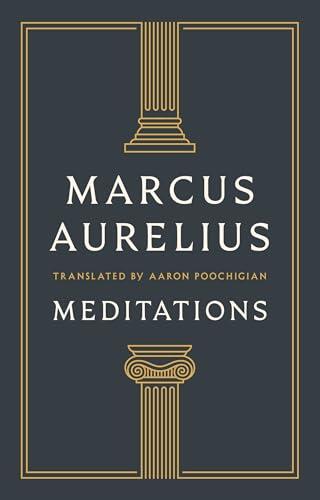
Acclaimed poet and translator Aaron Poochigian’s vibrant new translation of Marcus Aurelius’ Meditations captures and accentuates an aspect of the best-selling work of classical antiquity that other English translations have, remarkably, Marcus’ distinct, varying voices. There’s Marcus the aspirant, speaking encouragingly to himself as a diarist might; Marcus the instructor, exhorting and chiding himself as a “you” that includes us all; Marcus the stylist, spinning memorable, quotable epigrams; and Marcus the philosopher, opining about the “human commonwealth” of which we are all members. This multivocal chorus is apparent to all who can read the original Koine Greek text, but Poochigian’s sensitive ear has captured it in English as no translator has before. The result is a Meditations that is as pleasurable to read as it is profound—a revelation even to readers who think they know it well.
Genres
Avis
Voir tout
This book took me much longer to read than I expected, not because it was difficult, but because I kept stopping to underline, reflect, and make notes. I don’t always read for entertainment. Sometimes I read to learn, and Meditations was exactly that kind of book.What amazed me most is how similar the human mind remains despite the centuries between us. In so many of Marcus Aurelius’ thoughts, I could see myself. The fears, the motivations, the inner struggles, they feel timeless. It’s incredible to witness how philosophical thinking evolves, yet continues to circle around the same fundamental questions of purpose, discipline, and meaning.If you enjoy philosophy and observing how human thought changes while remaining deeply familiar, this book is for you. Short, powerful, and full of wisdom. A small book with so much to say.

I read a few of Marcus Aurelius' journal entries(?) in college but hadn't read all of them. It is amazing that his writings still hold up. This guy, who was arguably the most powerful man in the world at the time some 1800 years ago, had many of the same mundane problems and internal struggles we all do. While I don't completely ascribe to the ideals of stoicism, and probably lack some context and understanding, there is some timeless wisdom here around attempting to live life ethically and focusing on what we can control. Absolutely a must read for probably everyone. Also, this edition is on KU, and I appreciated the approachable translation and some (but not too much) additional commentary.
Meditations by Marcus Aurelius isn’t a book you read once and move on from. It’s more like a book you revisit throughout different stages of your life, gaining new insights each time. It’s filled with wisdom, and almost every paragraph has something quotable—something that makes you pause and think. Even if you’re not into Stoicism, you can still take away a lot from this book because it’s not just about philosophy; it’s about life, discipline, and perspective.That said, the book does get repetitive. Marcus often circles back to the same ideas, just worded differently. At times, it even feels like he was going through an existential crisis. Some of his thoughts contradict each other, but that’s what makes it real—it’s a personal journal, not a polished philosophical treatise. The old style of writing can also be a bit difficult to grasp at times, but that’s more of a personal struggle than a flaw of the book itself.Overall, Meditations is worth reading, not because it’s some grand philosophical work, but because it offers practical, timeless advice. You don’t have to agree with everything in it, but there’s a good chance you’ll find something that resonates. And even if you don’t, the experience of reading it itself is valuable. It’s not a book to speed through—it’s a book to sit with, think about, and return to later.