Détails du livre
Format
Kindle
Pages
367
Langue
Anglais
Publié
Feb 11, 2013
Éditeur
Springer
Description
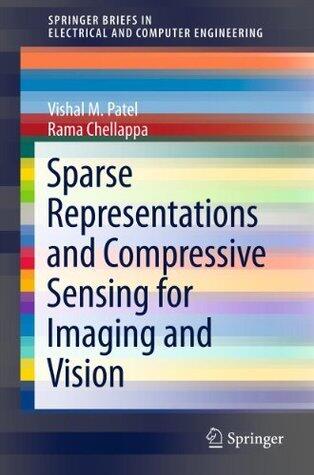
In a world increasingly driven by data acquisition and image processing, the principles of compressed sensing emerge as a transformative approach. The authors explore how this innovative technique reshapes the field of signal processing, particularly in imaging and vision. By focusing on sparse representations, they emphasize the ability to recover signals from fewer measurements than traditionally required, opening new avenues for efficiency and accuracy.
The work delves into the mathematical frameworks and algorithms that underlie compressed sensing. It meticulously explains the concepts of sparsity and redundancy in data, illustrating how these principles apply to various imaging modalities. Readers are guided through the implications of these techniques for real-world applications, from medical imaging to remote sensing, showcasing their potential to revolutionize how we perceive and manipulate visual data.
Moreover, the authors provide a comprehensive overview of the challenges and breakthroughs that accompany this field. They discuss various strategies for signal recovery, noise reduction, and the integration of machine learning techniques that further enhance the capabilities of imaging systems. By synthesizing theoretical foundations with practical insights, the book serves as both a reference and a guide for researchers and practitioners.
Overall, the exploration of compressive sensing is presented as a pivotal step towards more sophisticated imaging technologies. Through their collaborative expertise, Patel and Chellappa invite readers to envision a future where efficiency and precision redefine the boundaries of imaging and vision.
The work delves into the mathematical frameworks and algorithms that underlie compressed sensing. It meticulously explains the concepts of sparsity and redundancy in data, illustrating how these principles apply to various imaging modalities. Readers are guided through the implications of these techniques for real-world applications, from medical imaging to remote sensing, showcasing their potential to revolutionize how we perceive and manipulate visual data.
Moreover, the authors provide a comprehensive overview of the challenges and breakthroughs that accompany this field. They discuss various strategies for signal recovery, noise reduction, and the integration of machine learning techniques that further enhance the capabilities of imaging systems. By synthesizing theoretical foundations with practical insights, the book serves as both a reference and a guide for researchers and practitioners.
Overall, the exploration of compressive sensing is presented as a pivotal step towards more sophisticated imaging technologies. Through their collaborative expertise, Patel and Chellappa invite readers to envision a future where efficiency and precision redefine the boundaries of imaging and vision.
Genres
Science & Technologie