Descrizione
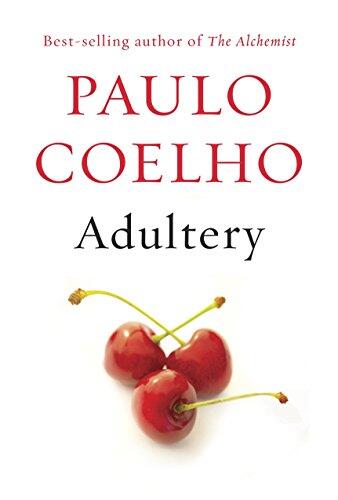
As she embarks on a journey of introspection, she begins to question the choices she has made and the life she has crafted. The mundane rhythms of her days weigh heavily on her, leading her to contemplate the nature of love and fulfillment. This intricate web of emotion unravels as she encounters a new relationship that challenges her beliefs, igniting a fire she thought had long been extinguished.
Her quest for self-discovery leads her down a path filled with complexities, as she confronts the moral implications of desire and the boundaries of commitment. Faced with the consequences of her actions, she grapples with her identity and the genuine meaning of happiness.
Through vivid storytelling, the narrative delves deep into the human heart, exploring themes of love, betrayal, and the relentless pursuit of one’s own desires. It invites readers to reflect on their own lives and the choices they make in the name of love and fulfillment.
Dettagli del libro
Generi
Recensioni
Visualizza tutto
Coelho's Adultery has surprisingly very little to do with adultery. It goes without saying that the latter behavioral pattern is present in the plot, but rather as an outcome or a symptom of some bigger problem and a far more complex issue. Linda wakes up one day to the realization of her inadequate existence in the universe. Like millions of other people, she is suddenly confronted with an intense feeling of meaninglessness, which is, after all, nothing but the natural outcome of the existential vacuum into which humanity willingly drowns itself. Such painful epiphanies are rarely met with valor and good faith. Linda, for one, takes the easy way, and rather flees the truth by immersing herself in adultery, and drowning her psychological agonies in instant pleasures of the flesh. By and by, she reaches the shore of safety again. She finds and creates her own meaning in life, and it is by means of nature, its beauty, and purity that she has managed to do so. Coelho's message here is quite beautiful. In an age of technology and artificiality, nature is taken for granted. Even in a country like Switzerland where the scenery is breathtaking, people take such gifts for granted and overlook their own blessings. The narrative voice, however, is not to be taken as an undisputed authority. Much if not all of Linda's views are clouded by her own psychological deficiencies. At times, she thinks the lives of her neighbors are as hollow as her own, and why? Simply because one of them had put much effort in the cleaning of his car! She questions the efficiency of psychiatrists and declares all the three she had consulted as incompetent. Linda is, in fact, a very ego centered character. She thinks, she understands the human state more than anyone else, that she can see through people, and even penetrate their depths. Eventually, we discover that she cannot even fathom the depth of her husband's thoughts. Unable to fathom her own, she flees the internal chaos in the arms of Jacob Konig. Thus, we realize that adultery is only one of the results of Linda's inner turmoil, and not the soul of the plot or the center of her story. As far as movement and style are concerned, the book bears many characteristics of post-modern literature. Among the techniques of the latter movement, intertextuality is very prominent especially in the allusions to Shelley's Frankenstein and Stevenson's Dr. Jekyll and Mr. Hyde. Distortion of time and the use of paranoia themes are also present in the plot in addition to the daring tone which challenges previously established values like John Calvin, his career, and motives. In the same manner, the focal character and heroine of the tale is a woman who cheats on her husband, lies to her family, and even considers criminal behavior which has no similarities with the heroic figure often used in other literary movements.